Event platforms are harder than they look#
Events concentrate everything difficult about web applications into a short window. Traffic arrives all at once when registration opens or voting starts. Inventory is limited, whether it's seats, time slots, vendor dates or votes. Payments must be exact, because refunds and disputes are expensive and public. And details change at the last minute: venues move, schedules shift and capacity changes.
A platform that works fine in testing can fail badly on launch night. I design event and booking systems for those moments: atomic booking logic, payment handling that survives retries, caching that absorbs spikes, and admin tools that let organisers react quickly without a developer.
Signs you need a custom platform#
- Generic ticketing or booking tools don't fit your model, fees or workflow.
- Double-bookings or overselling have happened, or you're worried they will.
- Your platform slows down or fails when registration opens or an event goes live.
- Organisers depend on you for every change to events, pricing or content.
- You need real-time features such as live results, messaging or availability.
What I build#
Event marketplaces#
Platforms connecting organisers, vendors and customers, with listings, search, maps, messaging and payments.
Booking systems#
Availability, capacity and time-slot management, with holds, confirmations, cancellations and waitlists, and calendar integration where it helps.
Registration and intake#
Multi-step forms, document uploads, approvals and communications for participants, vendors or contestants.
Competition and voting platforms#
Contestant management, public voting (paid or free), judging and scoring with full audit trails, and results people trust.
Real-time features#
Messaging, live updates, availability changes and notifications over WebSockets with Socket.IO.
Organiser tools#
Dashboards, reporting, content management and controls, so organisers run their events without waiting on developers.
Event and booking projects#
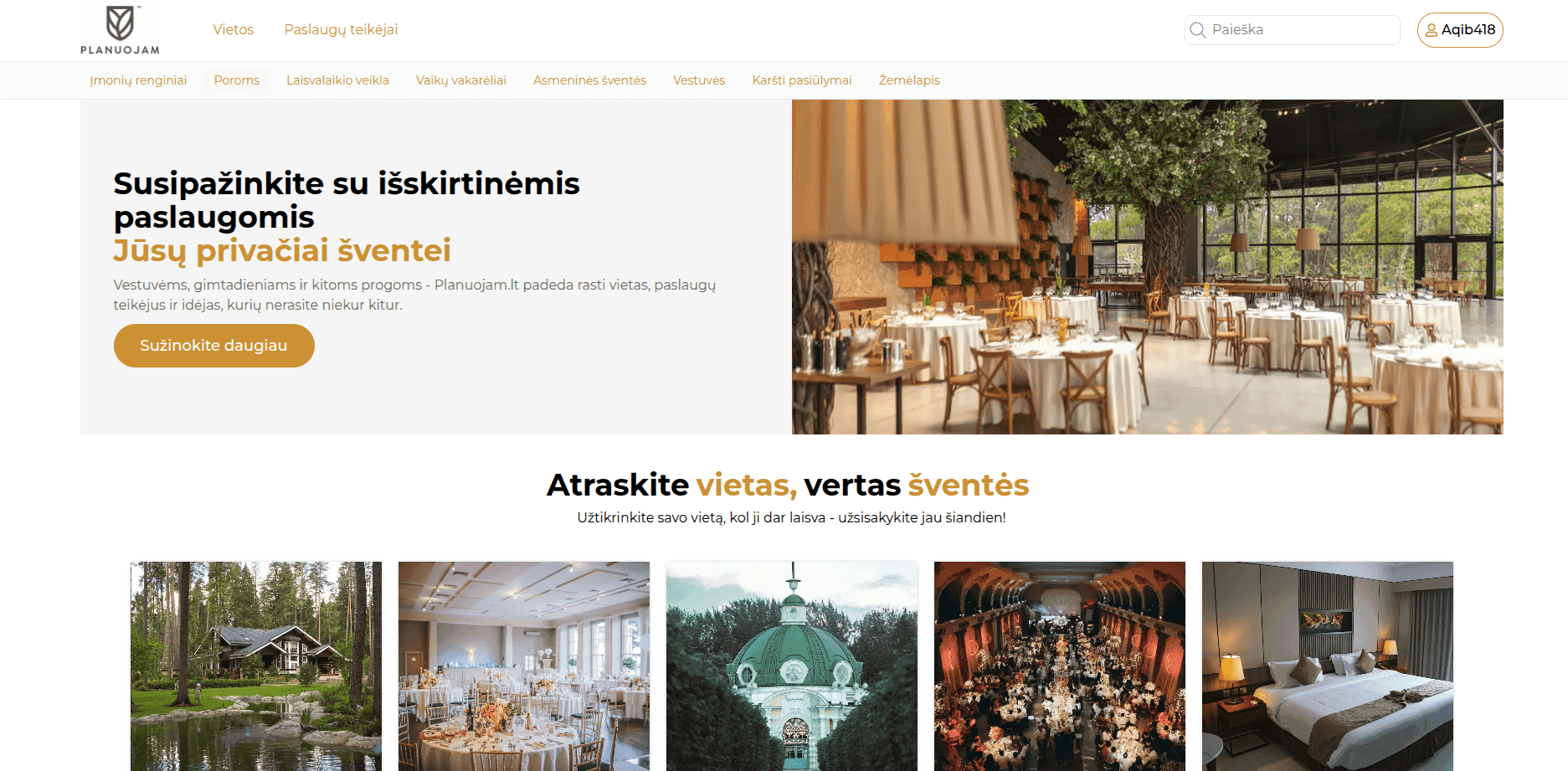
- Planuojam: a failing event-planning platform rescued and rebuilt as a headless marketplace in five languages, with real-time messaging over Socket.IO, Stripe payments, Mapbox maps and an AWS Translate-powered CMS workflow. Eduard of Planuojam called me a "Very professional developer" who helped "build really difficult project in time".
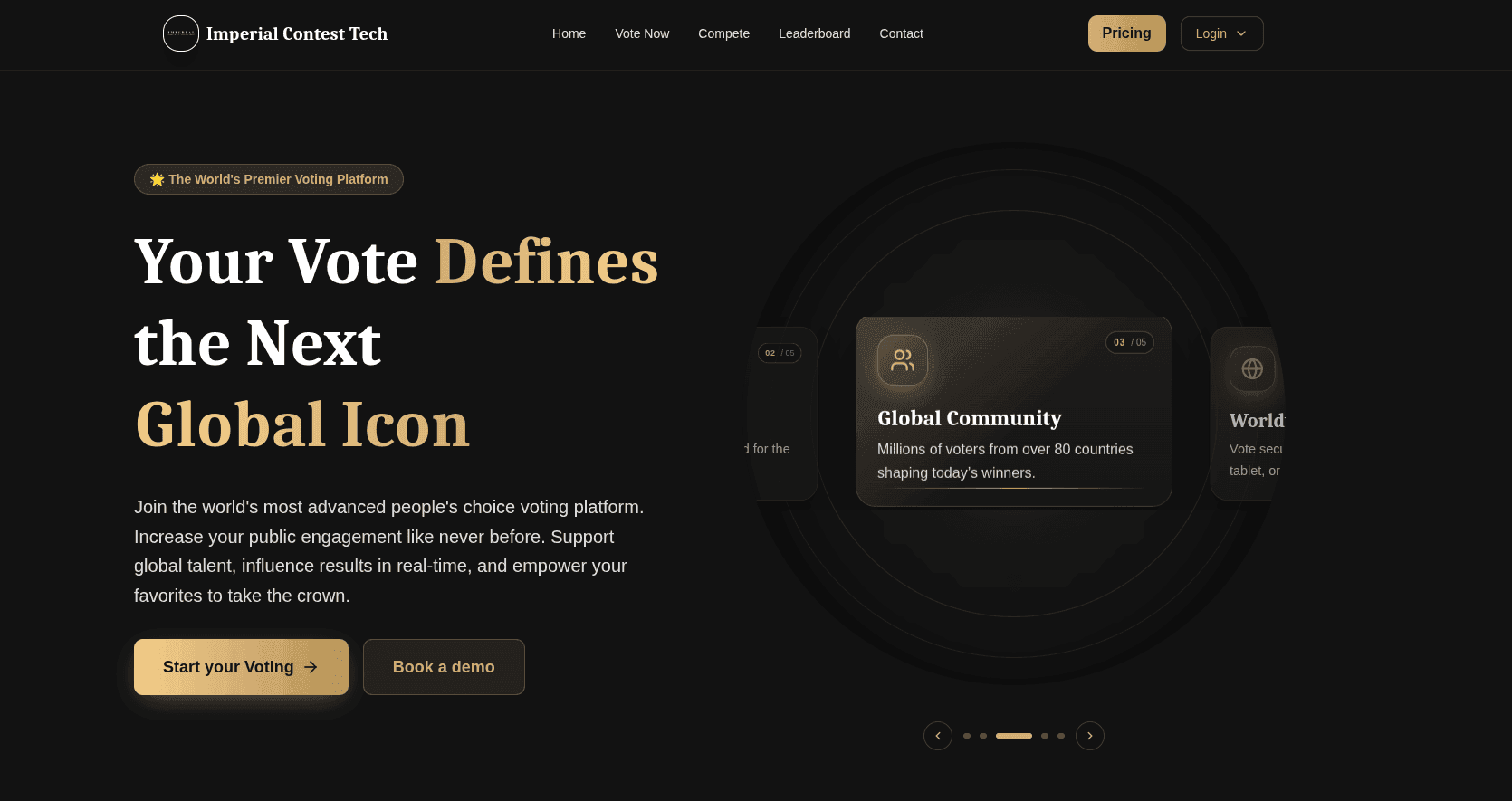
- Imperial Votes: a multi-tenant competition operating system for beauty pageants, modeling competitions and organizer-led contests. It covers end-to-end contestant intake, paid public voting with Stripe and Paystack, 100% idempotent payment and vote handling, fully auditable judging and scoring, custom social graphics and white-label customisation. JP Robberts said everything was "delivered far above expectation, within budget and on time".
I've also worked on a ride-hailing and vehicle booking platform for Birmingham Taxis, whose review opens with "Highly recommended freelancer!"
Built for launch night#
- Atomic reservations: availability is checked and claimed in a single database transaction, so two people can't book the same slot.
- Idempotent payments and votes: a retried request or resent webhook never counts twice.
- Caching and background jobs: public pages are served from cache, and emails, receipts and reports run in queues rather than in the request.
- Graceful degradation: if a third-party service slows down, the core booking flow keeps working.
- Audit trails: every booking, payment, vote and score change is recorded, so disputes can be resolved with facts.
Payments, refunds and cancellations#
Event money is rarely a single charge. There are deposits and balances, early-bird and group pricing, fees shared between the platform and organisers, cancellations with different refund rules, and chargebacks weeks later. I model those rules explicitly rather than handling them case by case, and drive payment state from the provider's webhooks so it's always accurate. Organisers see exactly what was paid, refunded and owed, and customers receive clear receipts and confirmations. The same care applies to votes and entries that carry a fee: each one is recorded once, even if the network or the payment provider retries.
Common booking platform mistakes I help avoid#
- Checking availability in the browser, which lets two customers book the same slot at the same moment.
- Confirming bookings before payment is final, leaving unpaid reservations blocking real customers.
- Sending emails inside the booking request, so a slow mail provider makes checkout slow.
- No holds or expiry, so abandoned checkouts lock inventory indefinitely.
- Time zones handled inconsistently, causing events and slots to show at the wrong time for some users.
Multilingual and multi-market events#
Events often cross borders. Planuojam serves customers in five languages, with localised routing, translated content published automatically through AWS Translate in the CMS, and prices and dates shown in the right format for each visitor. Designing for more than one language and currency from the start is far cheaper than retrofitting it later.
What you get#
- a platform that stays fast and consistent when traffic spikes;
- organiser tools to manage events, content, bookings and payouts;
- clear records of every booking, payment and change;
- the source code in your repository, and a deployment you control.
Built on solid foundations#
Behind these features are the same things that make any platform reliable: transactional booking logic, idempotent payments, background processing and caching. If you're building this as a product for many organisers, see SaaS development. For companion apps, see mobile app development.
Working together#
We start with a free 30-minute call about your events, users and how money flows. You get a written scope covering the booking model, payments and organiser tools, with milestones and an estimate. Builds run at a fixed scope, with support available on a retainer around busy event periods.
Planning an event or booking platform? Book a free call.