

Engineering Scalable SaaS: Architectural Patterns for AI & Logistics#
Building a functional application is one thing. Building a scalable, reliable, production-ready SaaS platform is another. The difference usually comes down to architecture: how the system handles growing traffic, complex integrations, data reliability, performance, and deployment risk.
As a senior full-stack developer and AI integration specialist, I have found that technology trends change quickly, but strong architectural principles remain useful across projects.
Whether I am building custom SaaS platforms, AI-powered applications, logistics systems, or high-performance PHP backends, the goal is the same: choose architecture based on the problem, not the trend.
This article explores several architectural patterns I use when designing scalable SaaS applications, particularly systems involving AI, logistics, external APIs, high-volume data, and continuous deployment.
Architectural Trade-offs in Modern SaaS#
One of the first architectural decisions in a SaaS project is determining how much of the system should remain together and where responsibilities should be separated.
A traditional Laravel monolith can be extremely effective for a complex business application. A distributed architecture using Next.js, Node.js, or dedicated services can make sense when different parts of the system have significantly different scaling or performance requirements.
The important question is not:
"Which architecture is more modern?"
The better question is:
"Which architecture best fits the application's actual constraints?"
Those constraints can include:
- Request latency
- Database workload
- SEO requirements
- Real-time functionality
- API throughput
- Team size
- Deployment complexity
- Operational costs
- Expected traffic growth
- Integration requirements
Monolith vs. Distributed Architecture#
For Expreco, a logistics platform involving shipping calculations and real-time API integrations, keeping complex business logic within a robust Laravel backend provided a practical foundation for handling transactional workloads.
For applications that require highly interactive interfaces or independent scaling between frontend and backend workloads, a decoupled architecture can provide more flexibility.
The key is avoiding architectural decisions based purely on fashion.
A well-structured monolith can be easier to maintain than an unnecessarily distributed system. Likewise, a distributed architecture can be the right choice when individual components have genuinely different scaling, deployment, or reliability requirements.
Start with the business constraints, then choose the architecture.
Designing Reliable AI-Powered SaaS Applications#
Adding an LLM to an application is relatively straightforward.
Making that AI system reliable is much harder.
An AI-powered SaaS application should not treat an LLM as the authoritative source of business data. Language models can generate useful responses, but application-critical facts should come from controlled and verifiable data sources.
This becomes particularly important when AI interacts with:
- Customer records
- Incident reports
- Financial information
- Inventory
- Shipping information
- Compliance documents
- Internal knowledge bases
- Operational databases
Building a Truth Layer Around AI#
For SafetySpace, I worked on an approach that separates AI-generated reasoning from authoritative application data.
Instead of allowing the model to freely invent structured information, the application can enforce structured output and validate the result before it reaches the user.
A typical flow looks like this:
User Request
     v
AI / LLM
     v
Structured Output
     v
Schema Validation
     v
Database / Business Rules
     v
Verified Application Response
Share this technical insight with your network
Share to LinkedIn or Facebook with key takeaways, featured media, and direct links.
Related Technical Articles
View all articles →
How I Built Imperial Votes: A Multi-Tenant Competition SaaS on Next.js & Prisma in 8k
A build breakdown of a multi-tenant competition platform on Next.js and Prisma: tenant isolation, fraud-resistant paid voting, and deadline-spike survival.
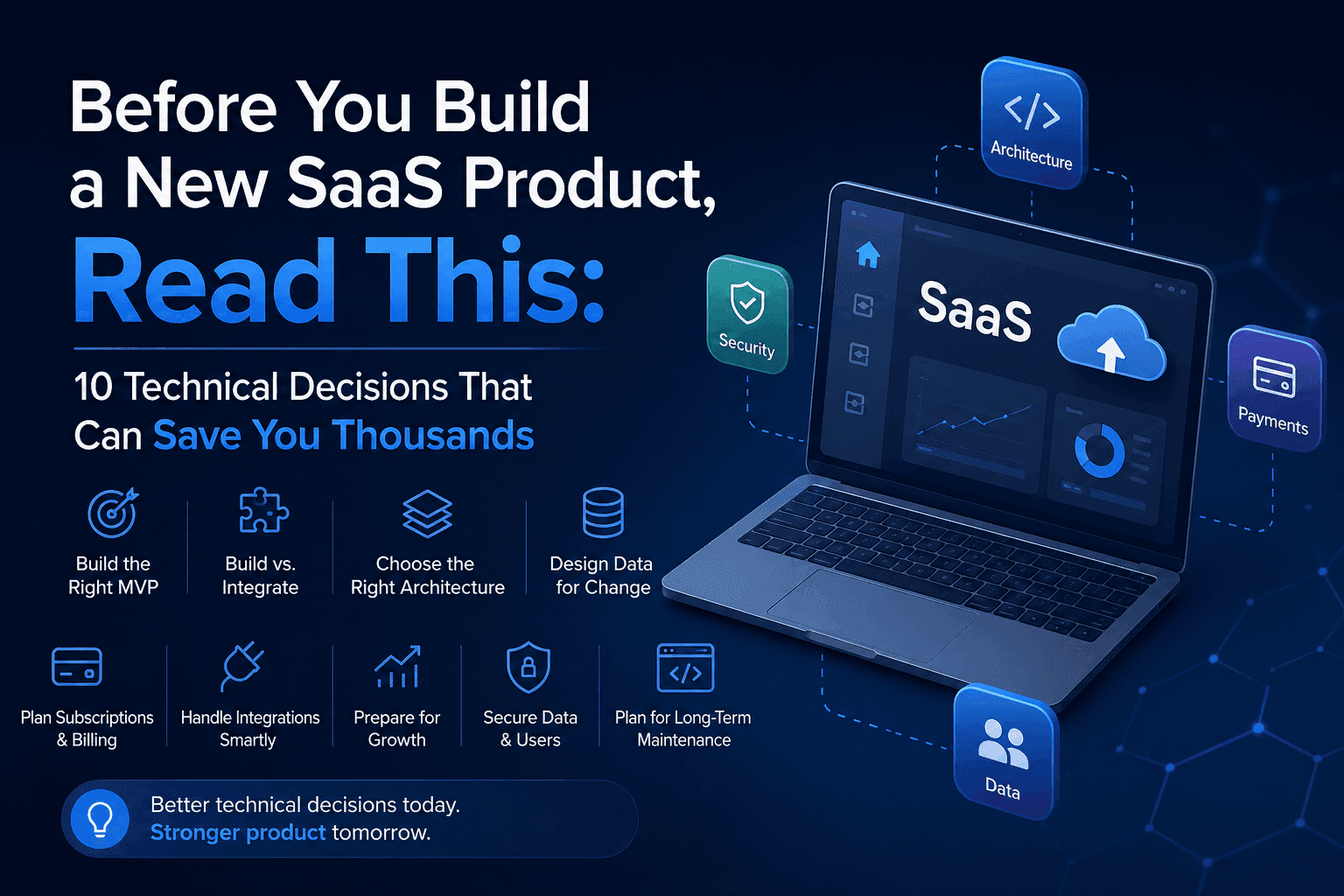
Before You Build a New SaaS Product: 10 Technical Decisions That Can Save You Thousands
The most expensive SaaS mistakes often happen before development begins. These 10 technical decisions can save you time, money, and costly rebuilds.
Real-Time Features in Laravel SaaS: Architecting Broadcasting and WebSockets That Hold Up in Production
A live dashboard that works for one user in a demo is easy. One that works for 500 users across tenants, through a dropped connection, is the real engineering problem.

When Deployment Broke the Application: How I Stabilized an AWS Production Environment
A production deployment problem exposed deeper infrastructure issues. Here’s how I diagnosed the system, fixed the root causes, and made deployments safer.
Have a complex technical project in mind?
Available for full-stack engineering, performance audits, cloud deployments, and high-concurrency systems architecture.