SafetySpace AI-Powered Safety Management Platform & Workflow Automation
AI-powered safety management built around real-world workflows
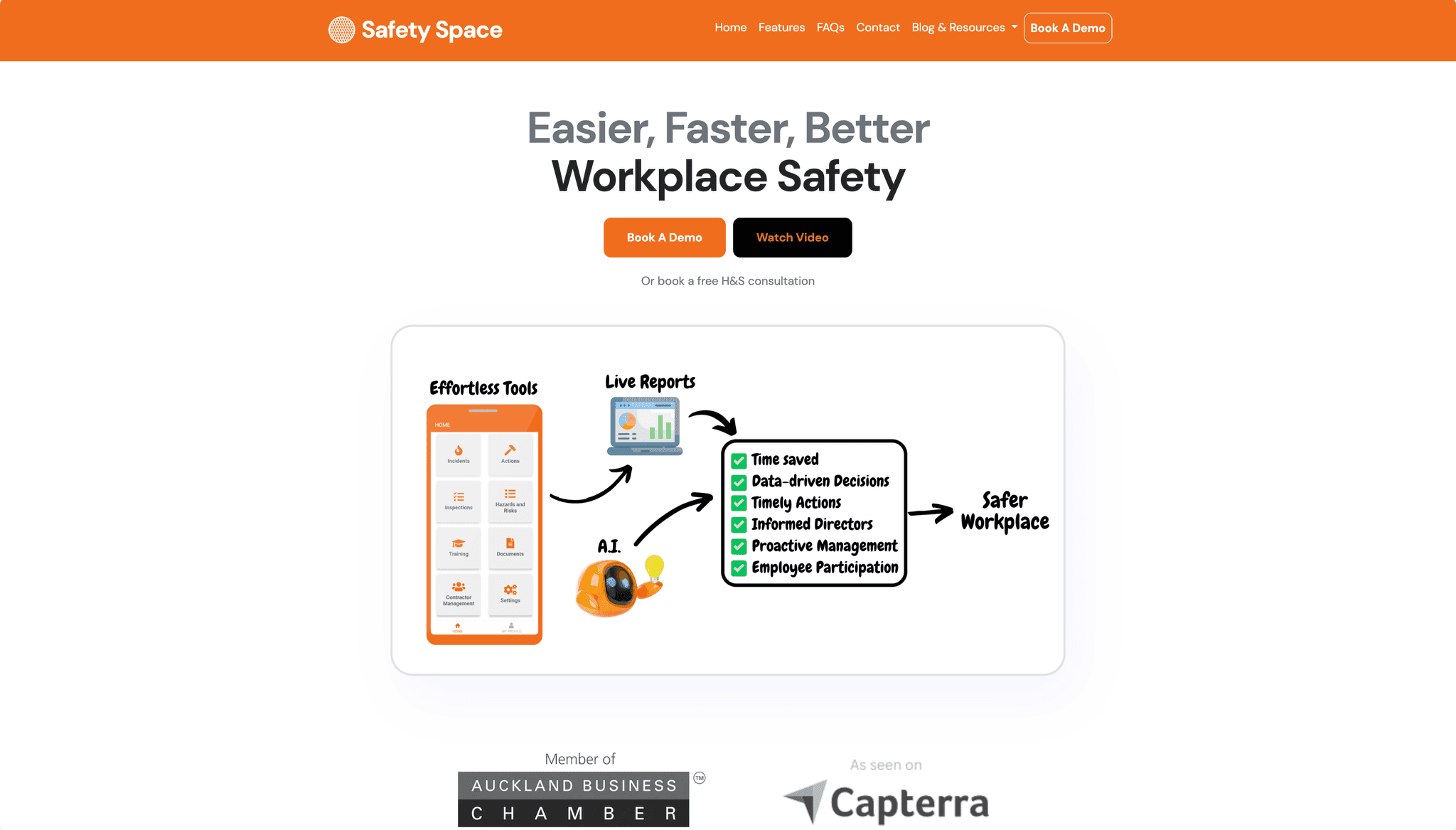
SafetySpace is an AI-powered safety management platform designed to help organizations manage safety processes, access critical safety information, and streamline documentation through intelligent, configurable workflows. As CTO, I led the technical direction and development of the platform across backend, frontend, architecture, and AI integrations—turning complex safety workflows into a more intelligent and streamlined digital experience.
Client
Apr 2024

Ahmed Al-Hassany
Managing Director & Founder, SafetySpace
Role
Chief Technology Officer
Year
2025
Category
AI · Safety Management · Enterprise ·SaaS
Ahmed Al-Hassany
Managing Director & Founder • SafetySpace
“Extremely knowledgeable and hard-working. I would recommend Aqib to anyone wanting high quality and efficient development”
“Aqib is a solutions-man, his planning and communication was great, and he went above and beyond to complete this project successfully. He is very skilled and works very efficiently. Aqib was a pleasure to work with.”
“Extremely knowledgeable and hard-working. I would recommend Aqib to anyone wanting high quality and efficient development”
“brilliant developer, very nice and honest, and great to work with”
Confidential Enterprise Project (Protected Under NDA)
Proprietary source code, database architectures, and internal endpoint credentials are confidential. This case study highlights non-proprietary architectural patterns, technical solutions, and verified outcomes.
SafetySpace Case Study#
The Challenge#
Safety management involves more than storing documents and completing forms. Teams need to work with large amounts of safety information, create structured documentation, manage workflows, and access the right information at the right time.
The challenge was to build a platform flexible enough to support different safety requirements while making those workflows significantly easier to manage.
The product also needed to go beyond traditional safety software by introducing AI into practical, day-to-day safety operations.
Building the Platform#
I led the architecture and development of SafetySpace, working across the backend and frontend while shaping the technical direction of the product.
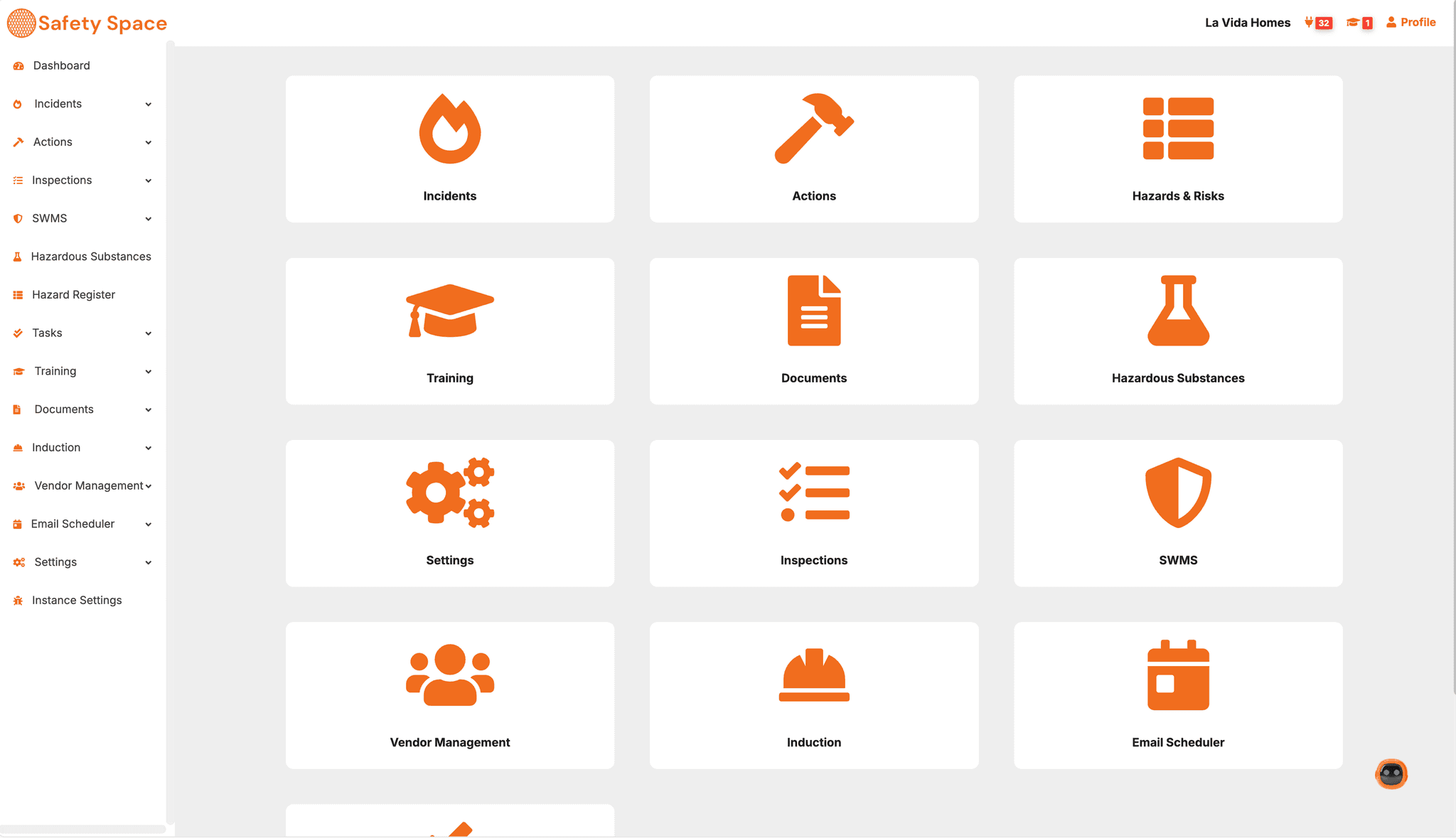
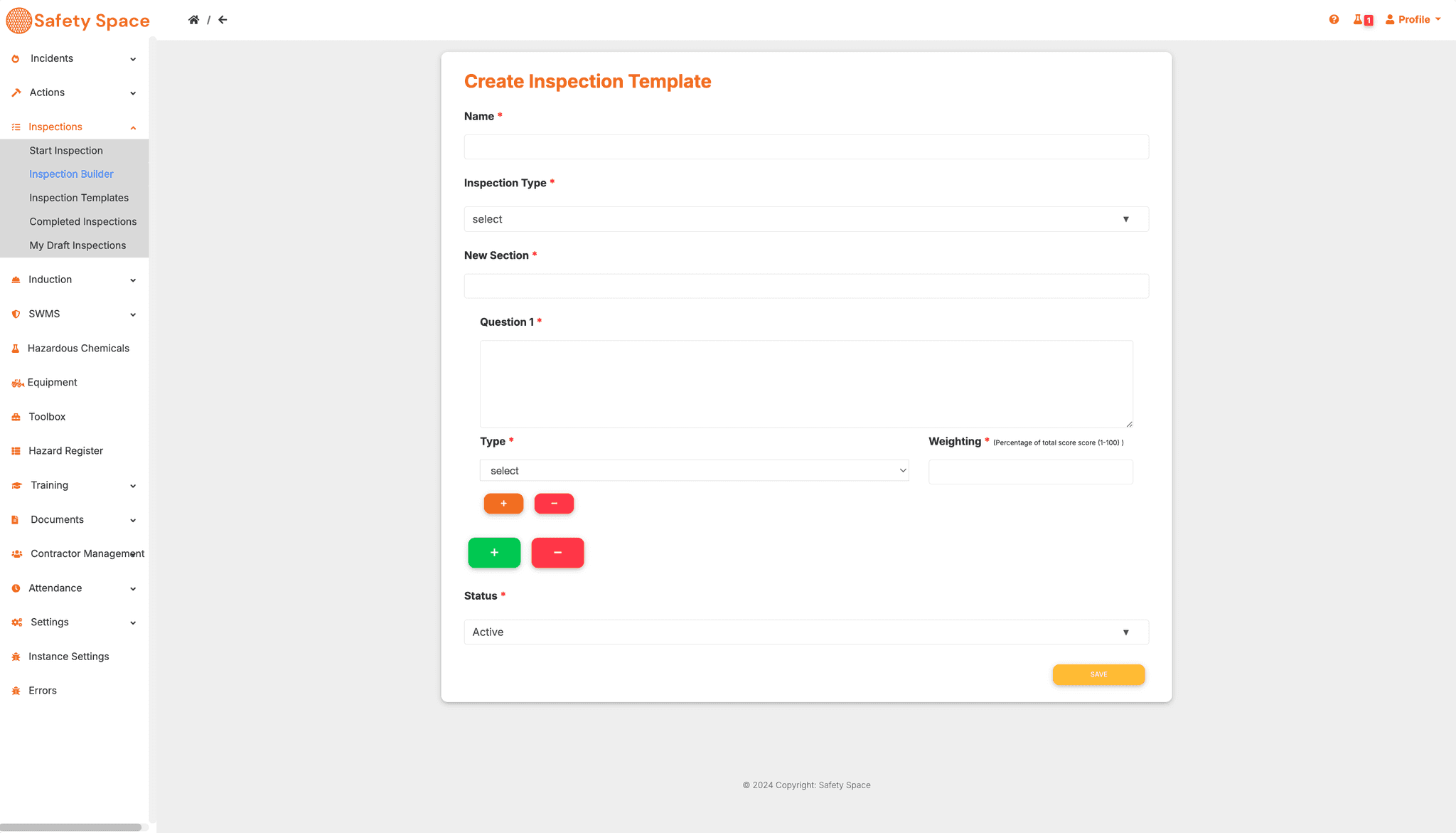
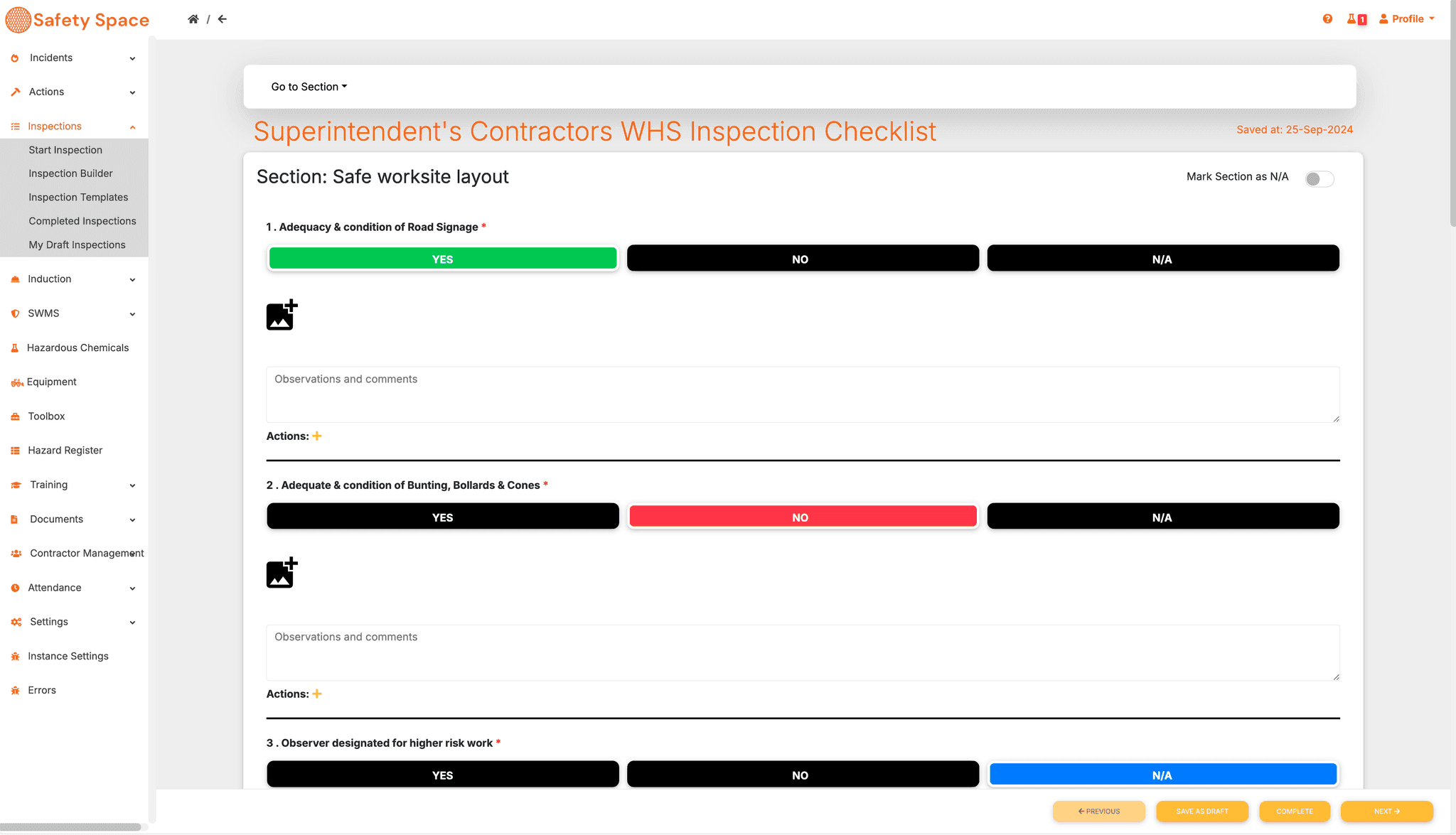
The platform was built around configurable safety workflows, allowing organizations to adapt the system to their operational requirements rather than forcing every organization into the same process.
The architecture also needed to accommodate continuous product evolution, new integrations, and increasingly intelligent features without turning the system into a collection of disconnected features.
Making AI Useful#
One of the key parts of the project was integrating AI directly into safety workflows.
Instead of treating AI as a standalone chatbot, I worked on using it as an operational layer within the platform.
This included:
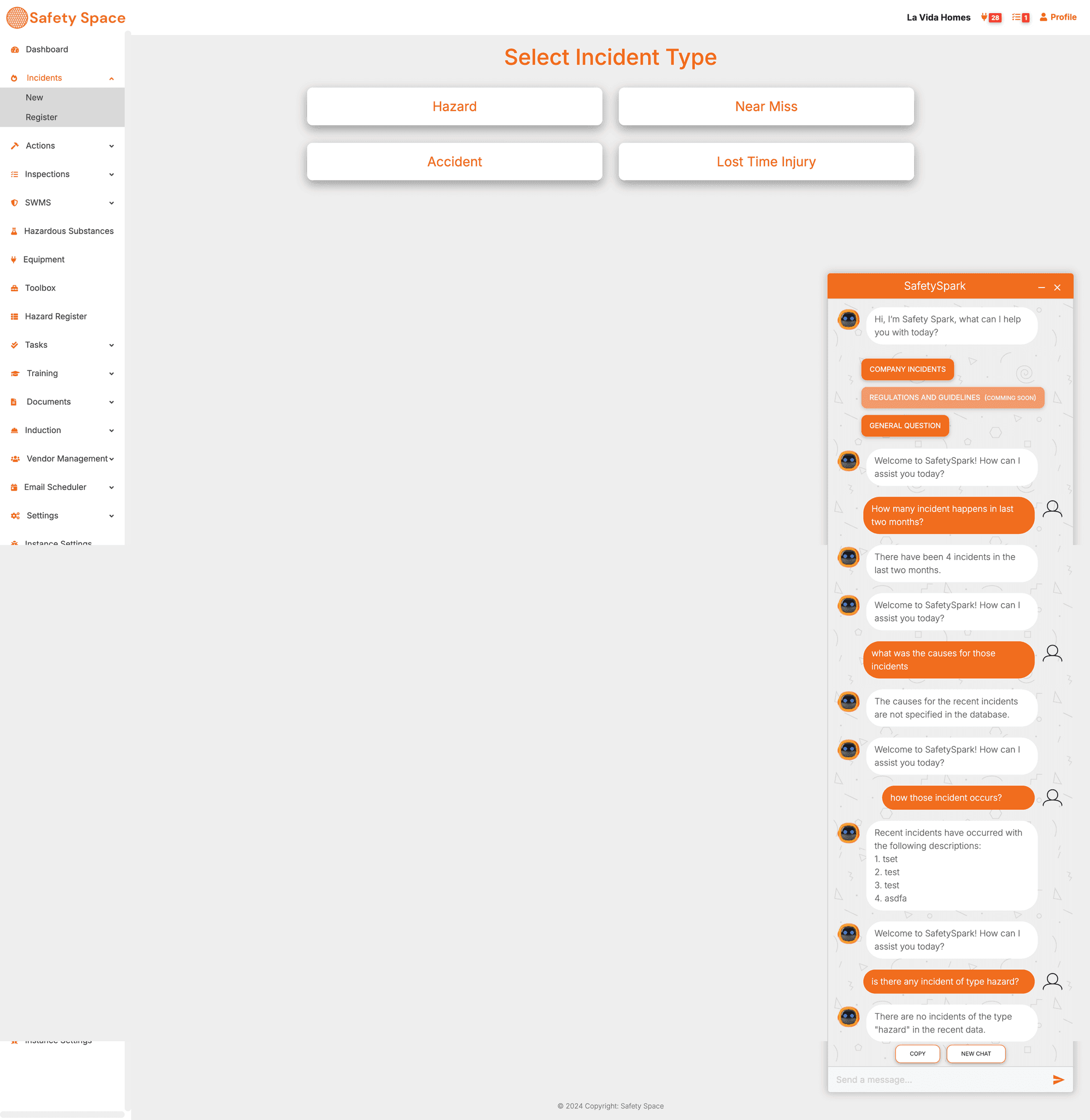
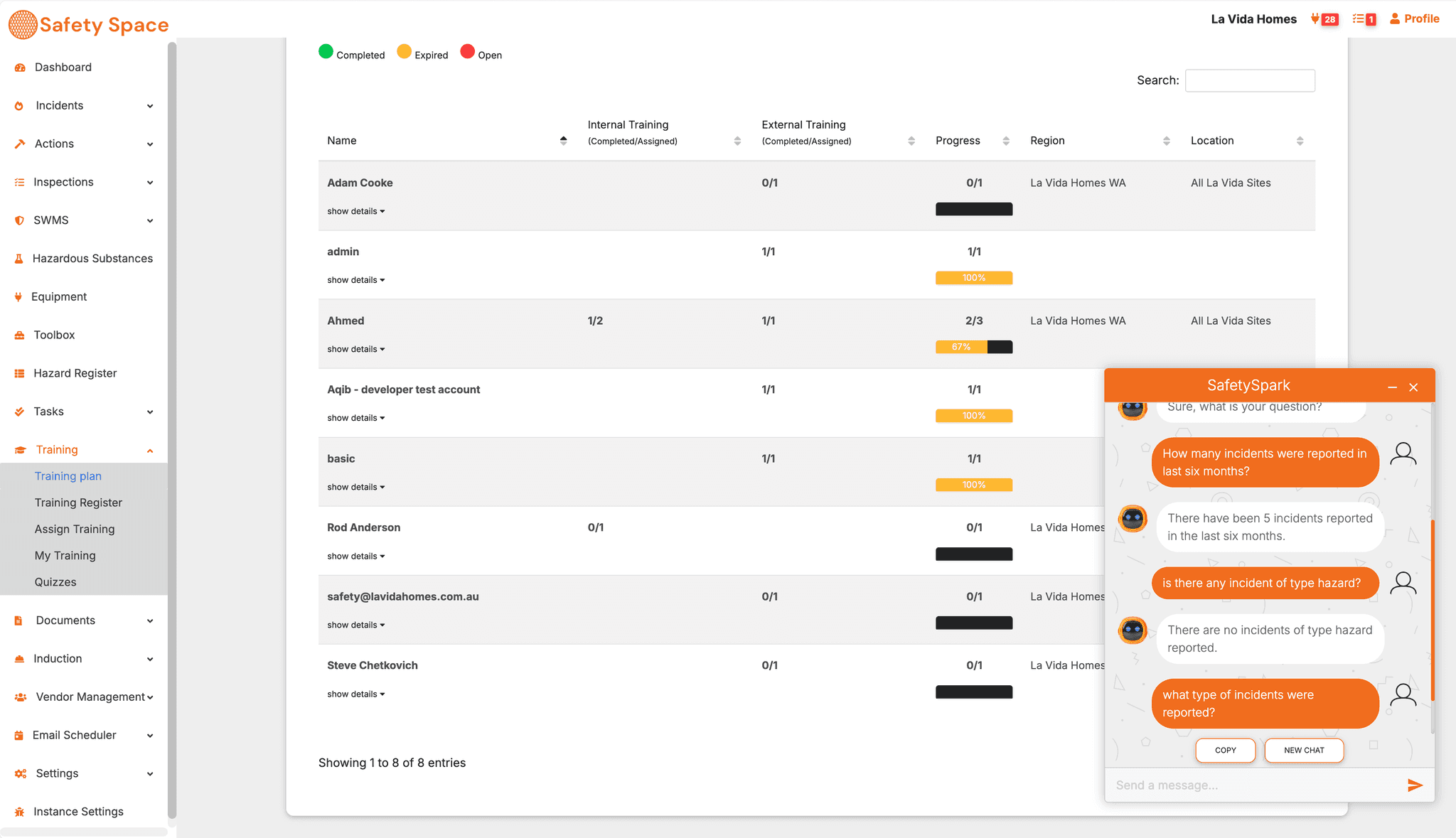
- An AI-powered chatbot for real-time safety insights and information retrieval.
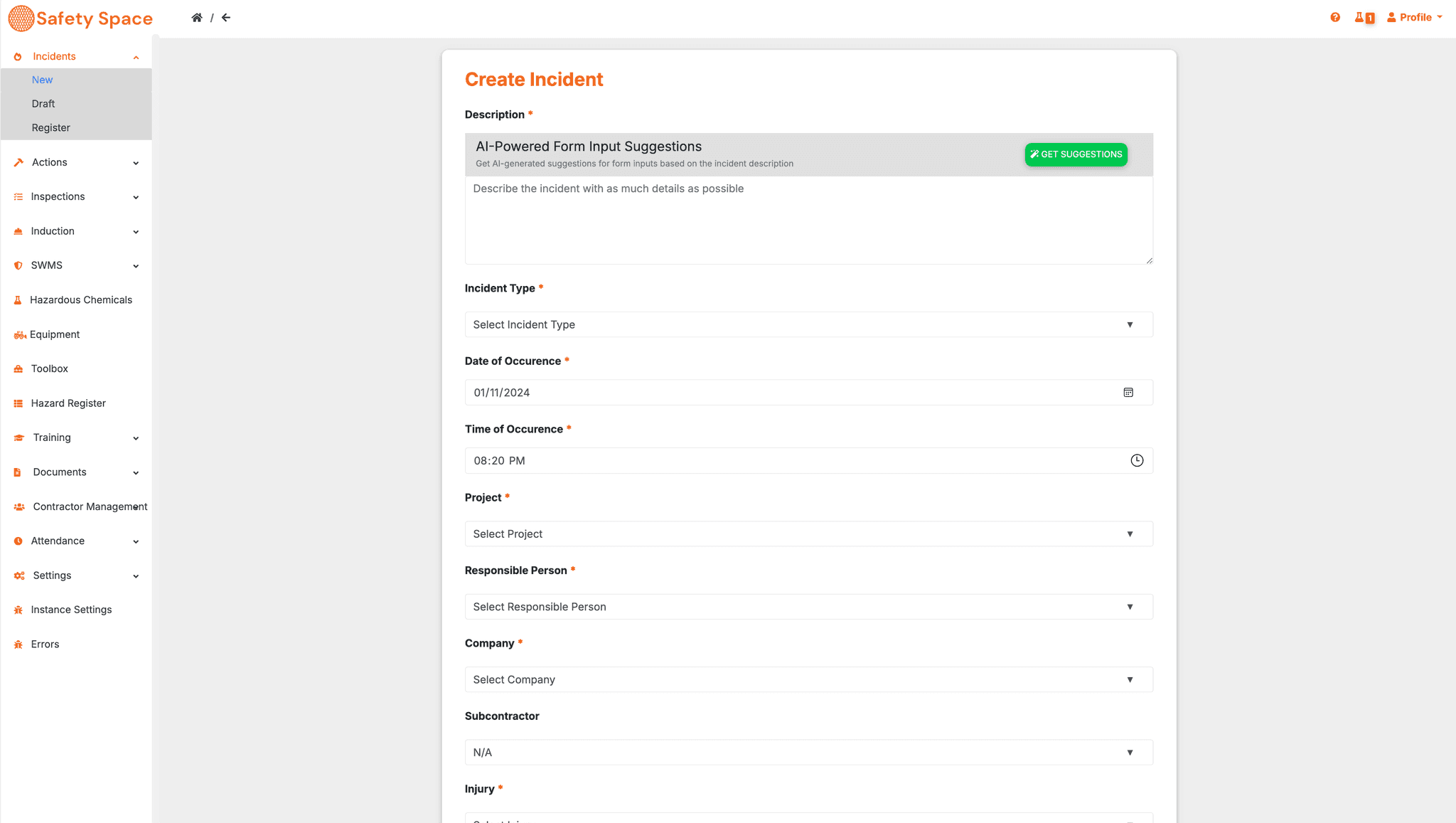
- AI-assisted form auto-completion to reduce repetitive data entry.
- AI-generated SWMS templates to accelerate safety documentation.
- AI-generated SOP templates for more efficient operational documentation.
- Integration with OpenAI and Truth Engine to power intelligent capabilities.
The goal was simple: use AI where it removes friction from real safety work.
From Information to Action#
A major focus was making safety information easier to access and act upon.
The AI chatbot allows users to interact with safety information conversationally, while automated document generation helps transform requirements into structured safety documentation.
This creates a more practical workflow where users can move from finding information → understanding it → creating documentation → taking action without constantly switching between disconnected tools.
Workflow Automation#
Beyond AI, I also worked on the platform's operational automation.
An email scheduling system with customizable email templates was implemented to support automated communication and recurring workflows.
This helped move repetitive communication tasks into the platform itself rather than relying on manual follow-up.
My Role#
As CTO, my involvement extended beyond individual feature development.
I was responsible for:
- Technical architecture and product development direction
- Backend development with Laravel
- Frontend development with Vue.js
- AI integration and AI-powered functionality
- API integrations with OpenAI and Truth Engine
- Designing and implementing safety workflows
- Developing automation features
- Leading the development team
- Coordinating backend and frontend development
- Evaluating technical approaches as the product evolved
The project required both hands-on engineering and technical leadership, with decisions made around maintainability, flexibility, and the practical needs of the product.
The Result#
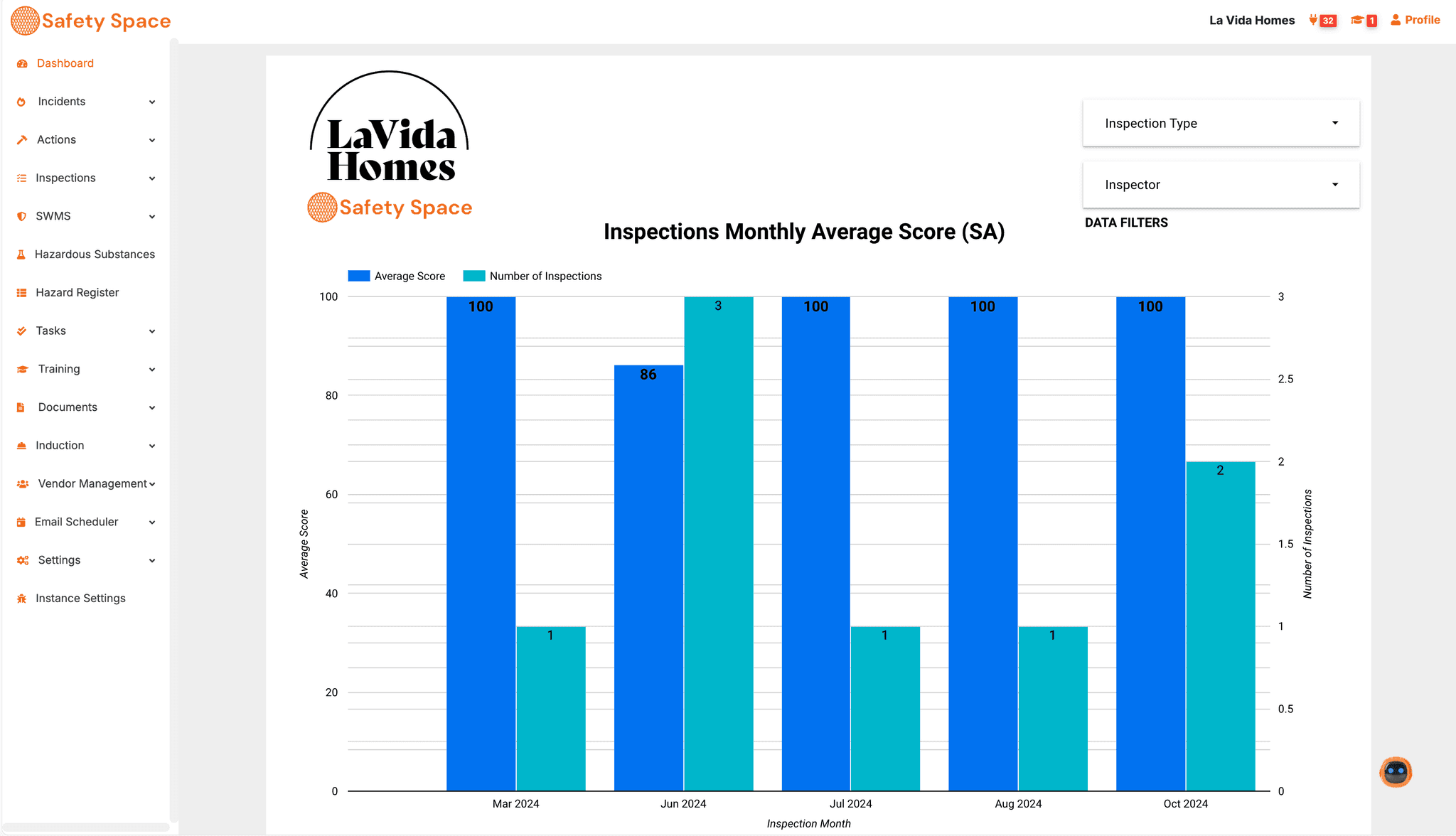
SafetySpace evolved into an AI-powered safety management platform where intelligence is embedded directly into the workflows users already depend on.
Rather than simply digitizing existing safety processes, the platform combines structured safety management, configurable workflows, automation, and AI assistance into a single product experience.
The result is a system designed to make safety operations more accessible, reduce repetitive work, and help users turn safety information into actionable outcomes.
Gallery
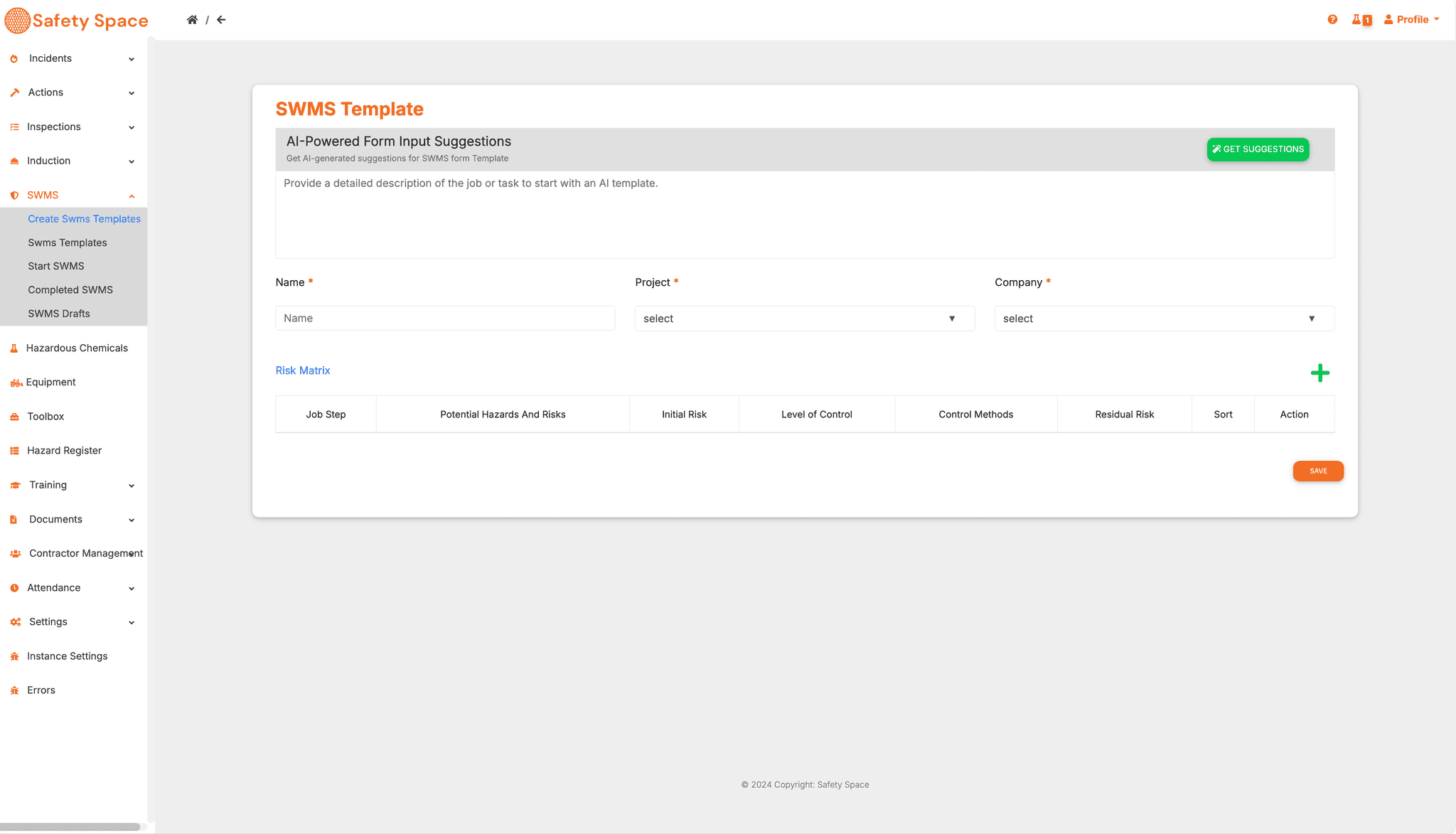
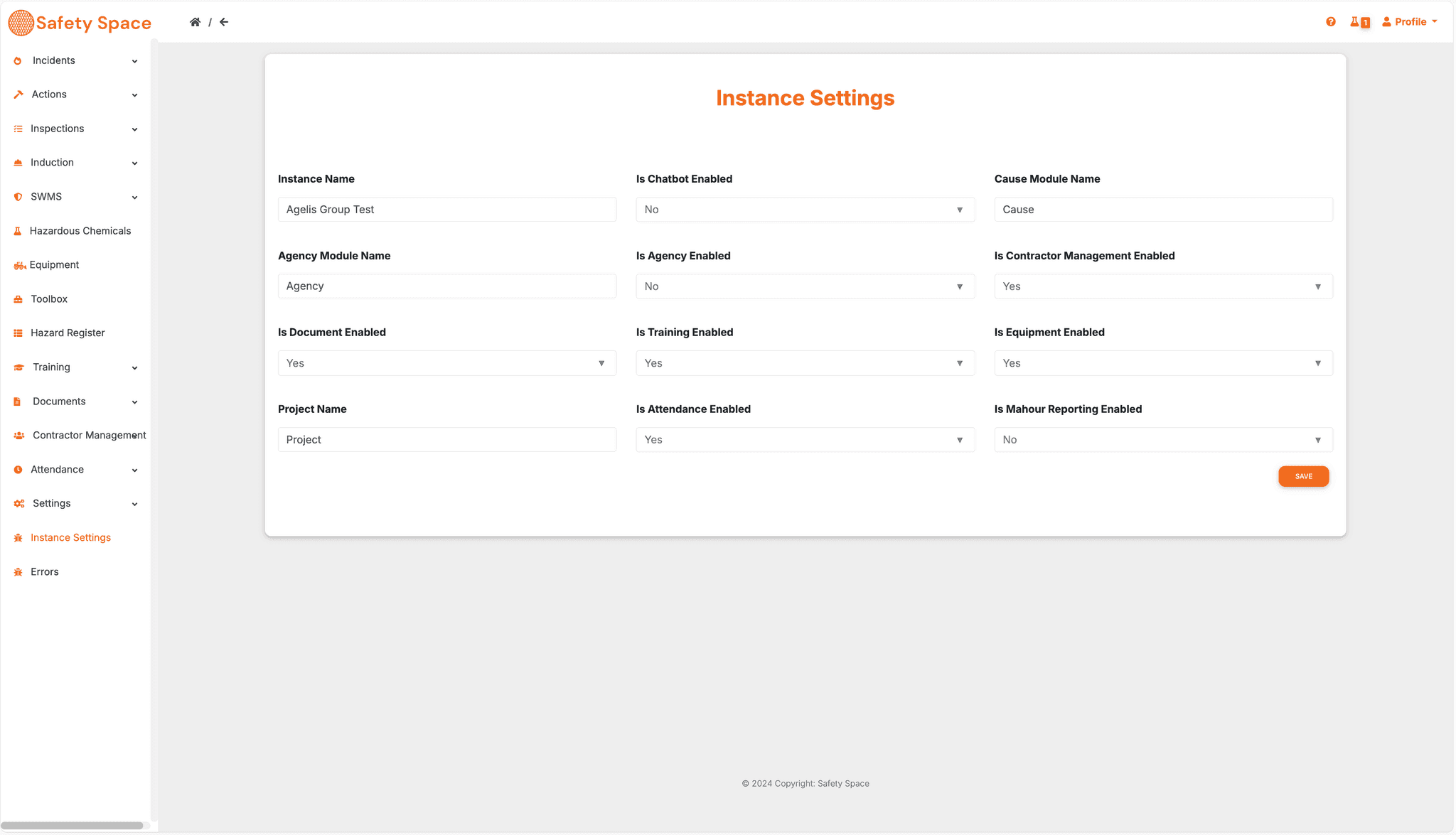
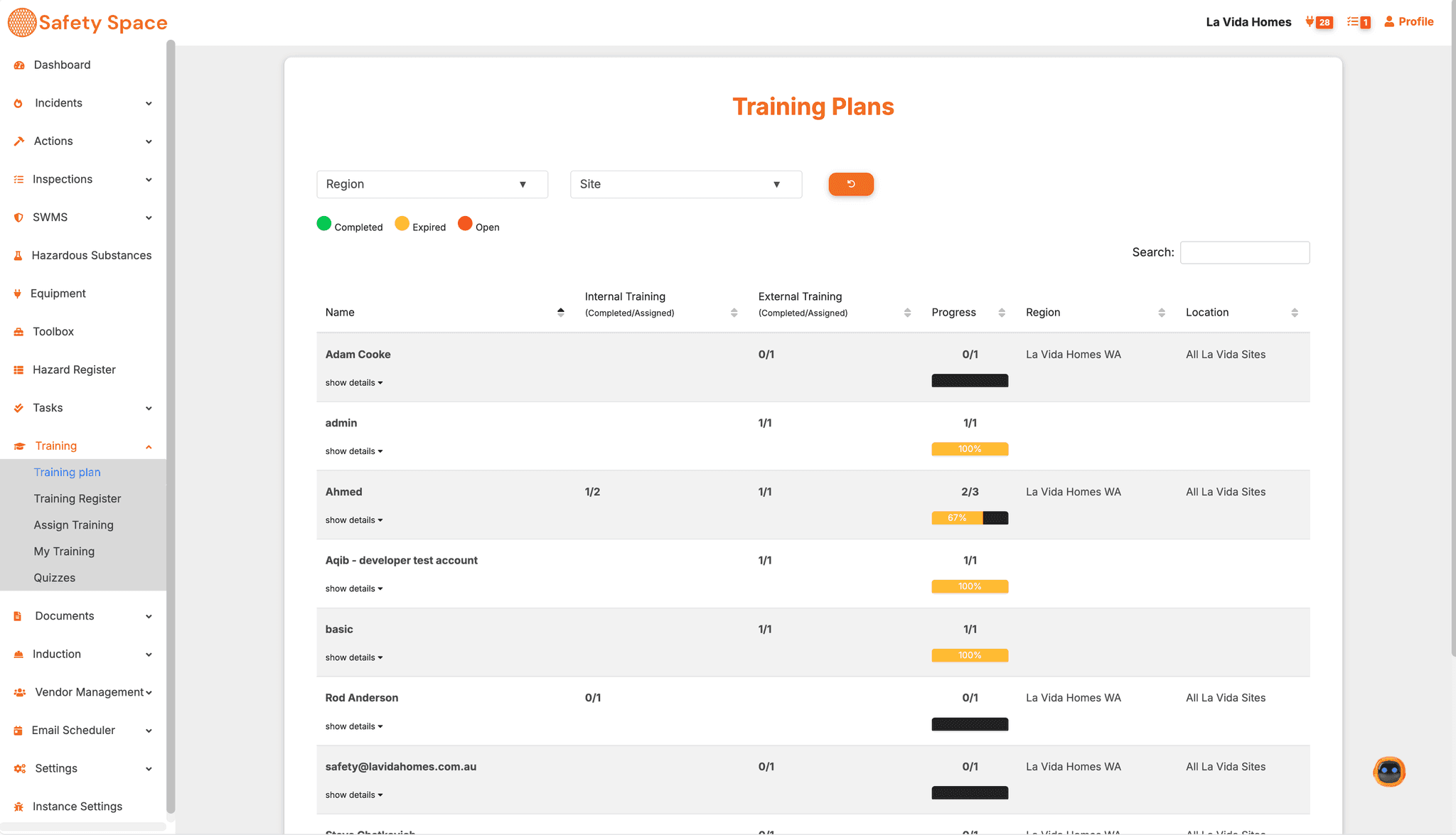
Tech stack
 Laravel
 Vue.js
 MySQL
MySQL OpenAI
 Truth Engine
 Bootstrap
 JavaScript
Timeline & Milestones
Initial Development
(2024)Took technical ownership of the SafetySpace platform and began leading its architecture and development.
Platform Architecture
(2024)Led backend and frontend development while establishing the technical foundation for configurable safety workflows.
AI Integration
(2024)Integrated OpenAI and Truth Engine and introduced AI-powered capabilities into the platform.
AI-Powered Workflows
(2024)Developed AI chatbot capabilities, form auto-completion, and AI-generated SWMS and SOP templates.
Automation & Product Evolution
(2025)Continued expanding platform capabilities, including email scheduling, custom templates, and evolving safety workflows.
Consultation
(2026)Providing ongoing technical consultation on platform architecture, AI capabilities, product evolution, and engineering strategy for SafetySpace.
Outcomes & Impact
- Delivered
AI-Powered Safety Assistance
Integrated AI directly into safety workflows through conversational insights, information retrieval, and intelligent assistance.
- Delivered
Automated Documentation
Introduced AI-generated SWMS and SOP templates to streamline safety documentation workflows.
- Delivered
Smarter Data Entry
Implemented AI-assisted form auto-completion to reduce repetitive input.
- Delivered
Configurable Safety Workflows
Built customizable safety functionality that can adapt to different organizational requirements.
- Delivered
Operational Automation
Implemented scheduled email workflows with customizable templates.
- CTO
Technical Leadership
Led architecture, development, AI integration, and the engineering team across the platform.
Technical Insights
Related Architecture & Engineering Articles
Why PHP Still Matters in Modern Web Development
PHP has evolved far beyond its early reputation as a simple scripting language. Modern PHP powers scalable backend systems, ecommerce platforms, APIs, SaaS products, and frameworks like Laravel, making it a practical choice for today's web development landscape.
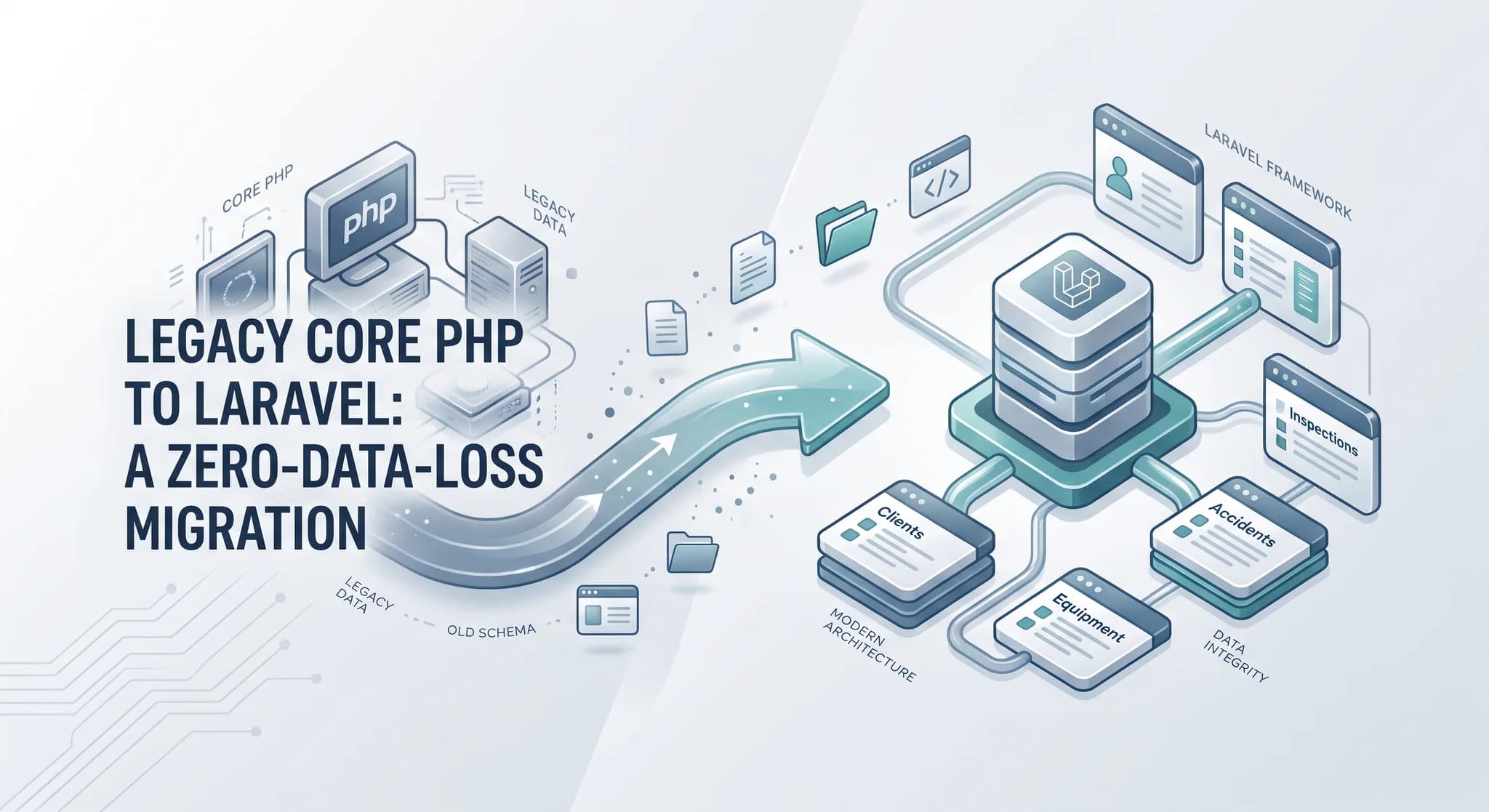
Migrating a Legacy Core PHP Platform to Laravel Without Losing Client Data
Rebuilding the application was only half the job. The harder part was moving years of unreliable data and client assets without breaking production.
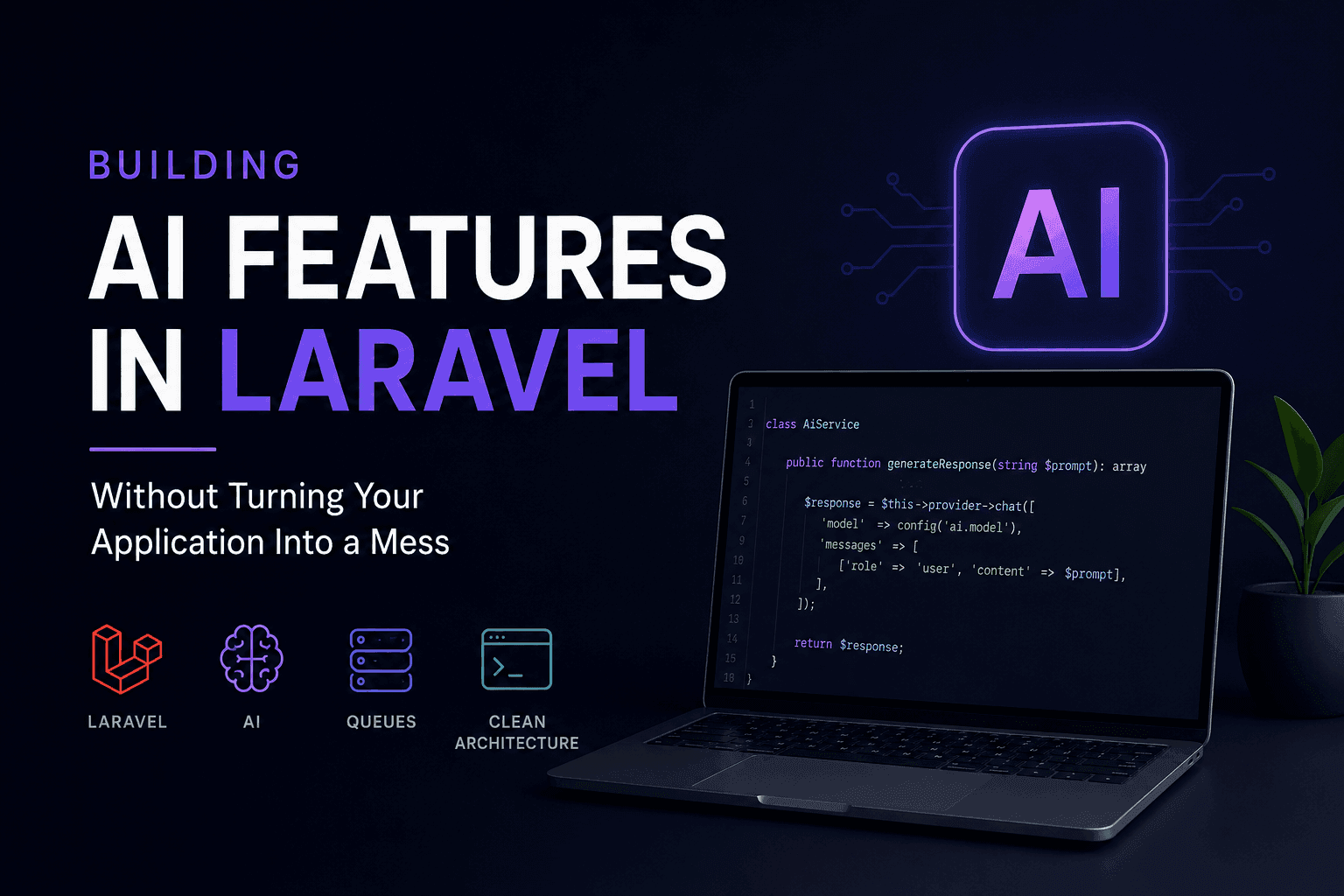
Building AI Features in Laravel Without Turning Your Application Into a Mess
AI features can quickly turn a clean Laravel application into a maintenance nightmare. Here's how to integrate AI without sacrificing architecture.
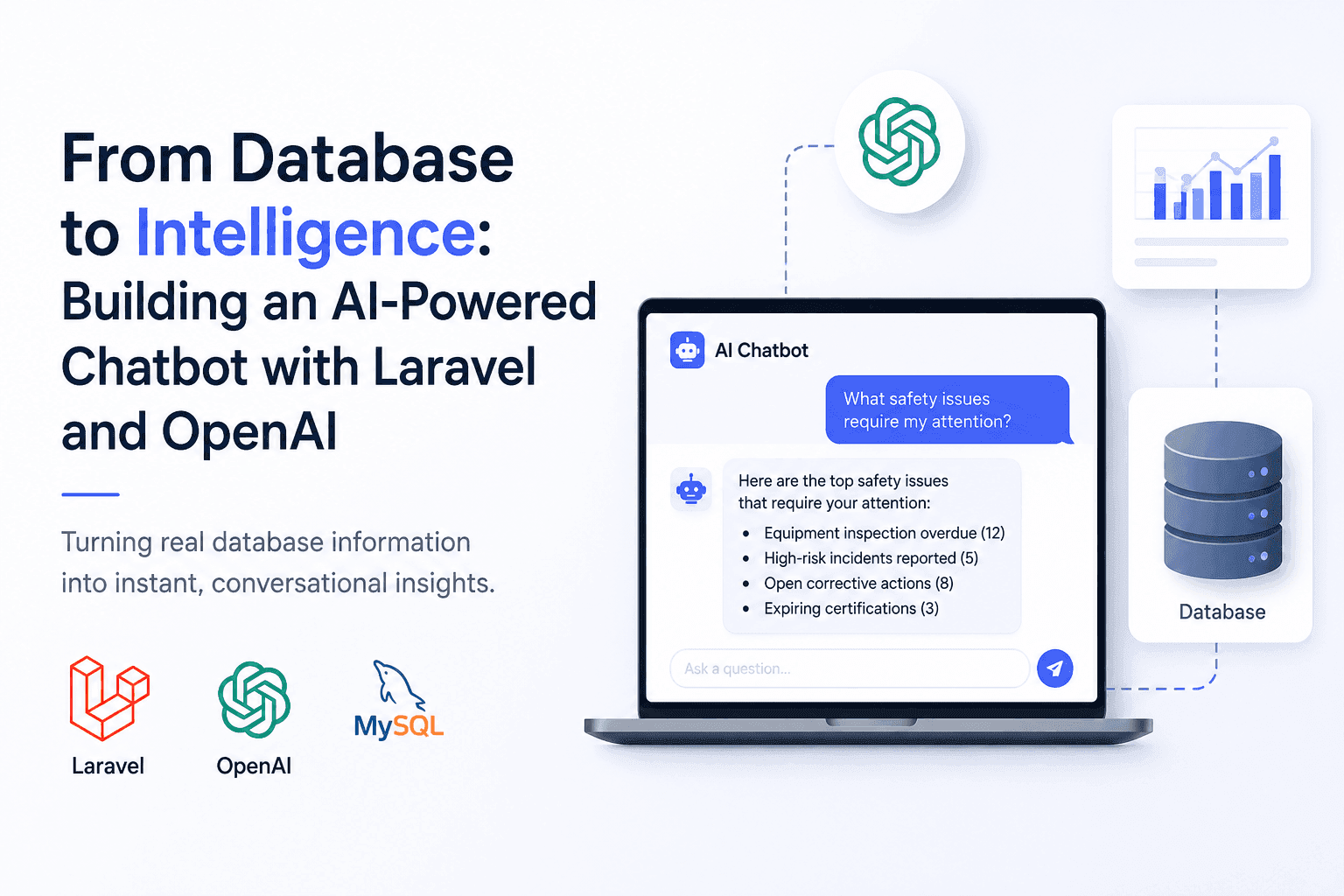
From Database to Intelligence: Building an AI-Powered Chatbot with Laravel and OpenAI
Users needed answers, not database screens. I built an AI-powered Laravel chatbot that connects OpenAI with real application data.
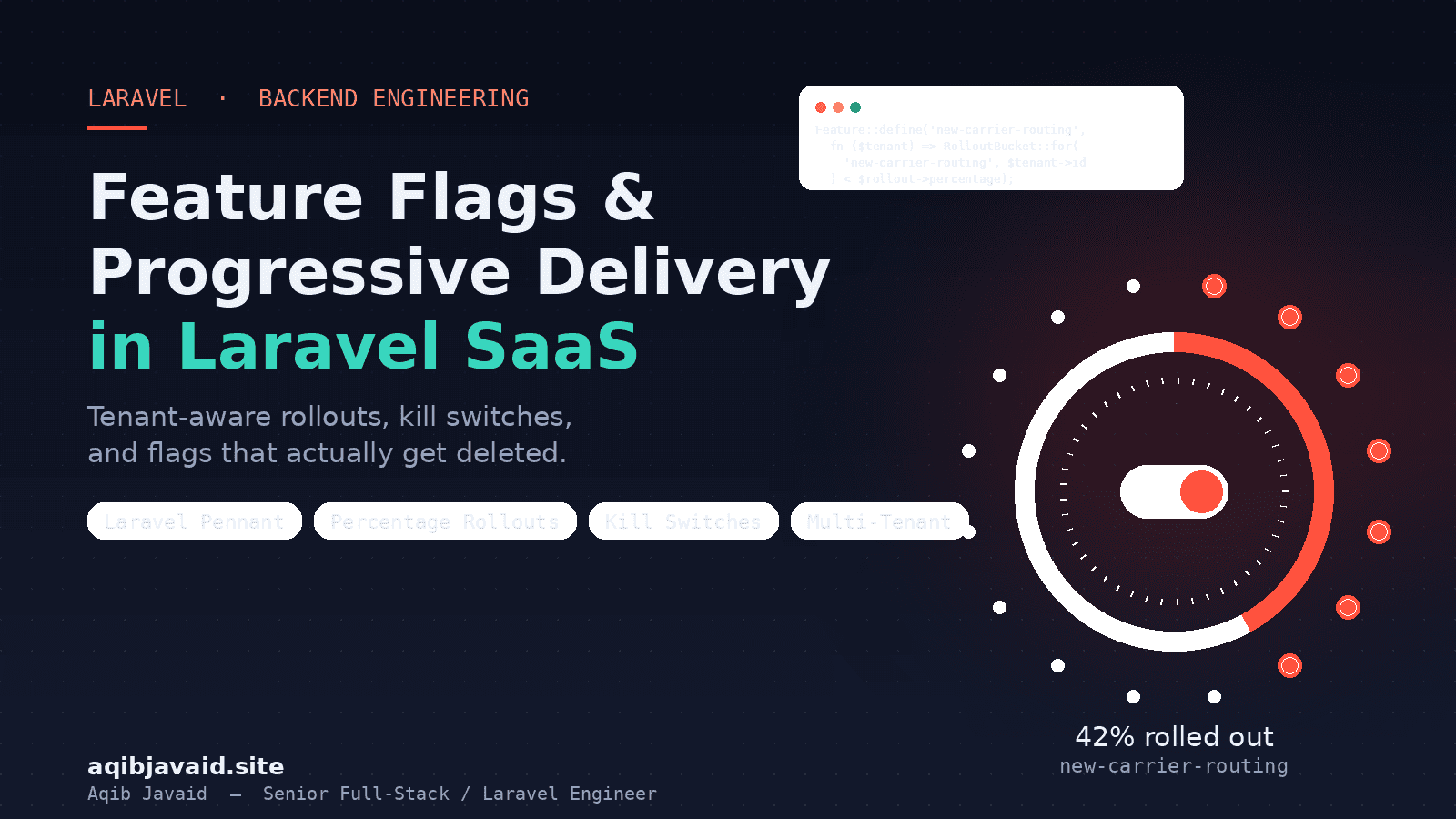
Feature Flags & Progressive Delivery in Laravel SaaS
Shipping behind an if statement isn't a rollout strategy. Here's how flags become an actual release mechanism instead of permanent code debt.
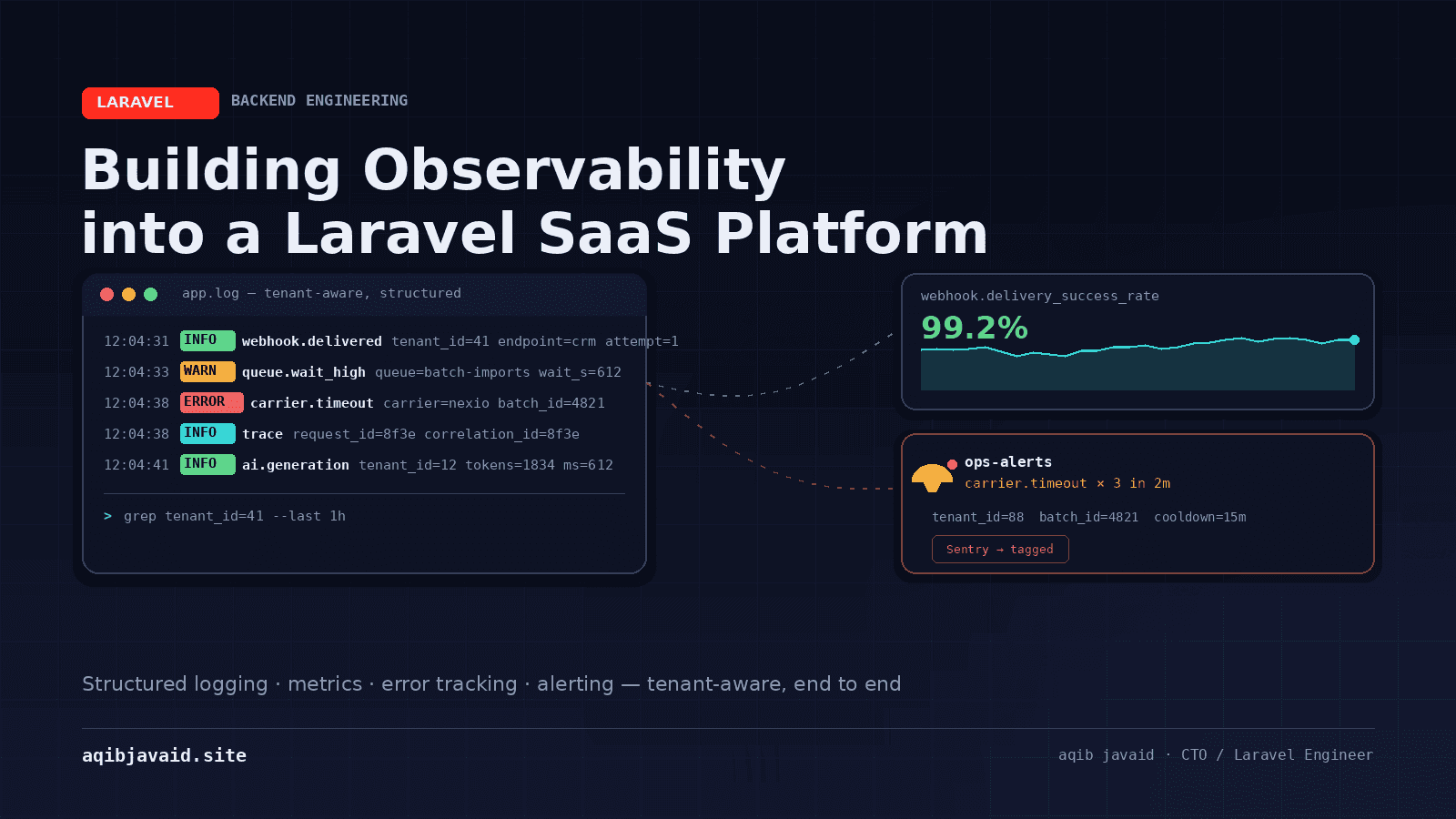
Building Observability into a Laravel SaaS Platform
A stack trace tells you what broke. It doesn't tell you which tenant, which request, or whether it's still happening right now.

When Deployment Broke the Application: How I Stabilized an AWS Production Environment
A production deployment problem exposed deeper infrastructure issues. Here’s how I diagnosed the system, fixed the root causes, and made deployments safer.
How Much Does an AI Chatbot Cost? Build and Running Costs
What an AI chatbot really costs to build and run: ballpark ranges by scope, the factors that move the price, the monthly costs people forget, and how to keep a first version small.
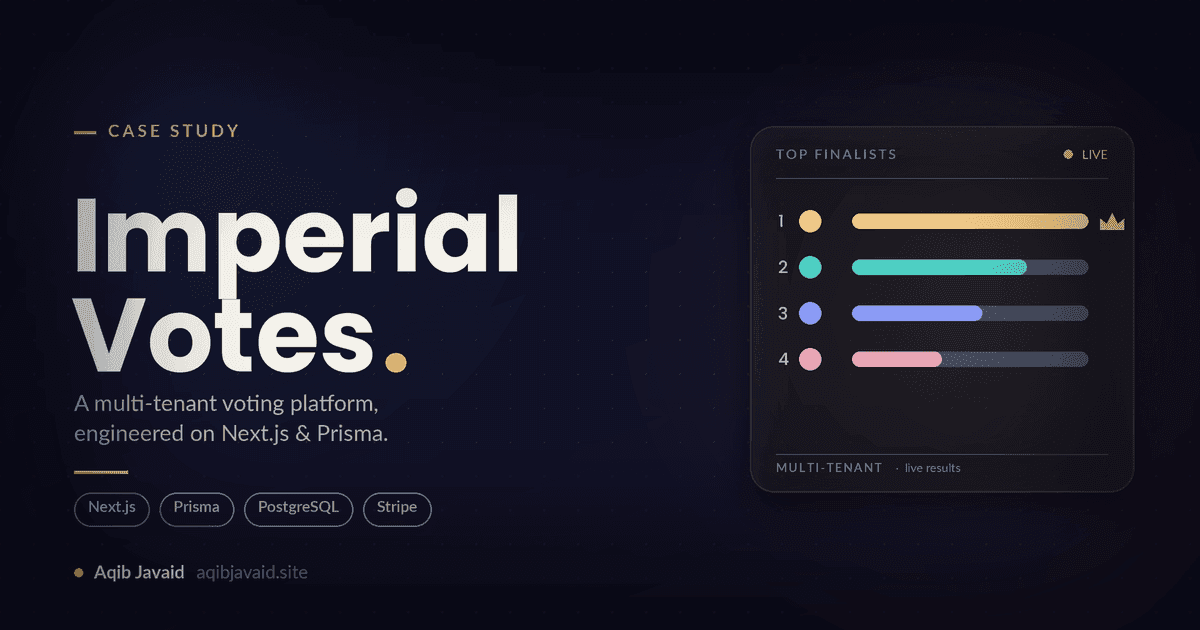
How I Built Imperial Votes: A Multi-Tenant Competition SaaS on Next.js & Prisma in 8k
A build breakdown of a multi-tenant competition platform on Next.js and Prisma: tenant isolation, fraud-resistant paid voting, and deadline-spike survival.
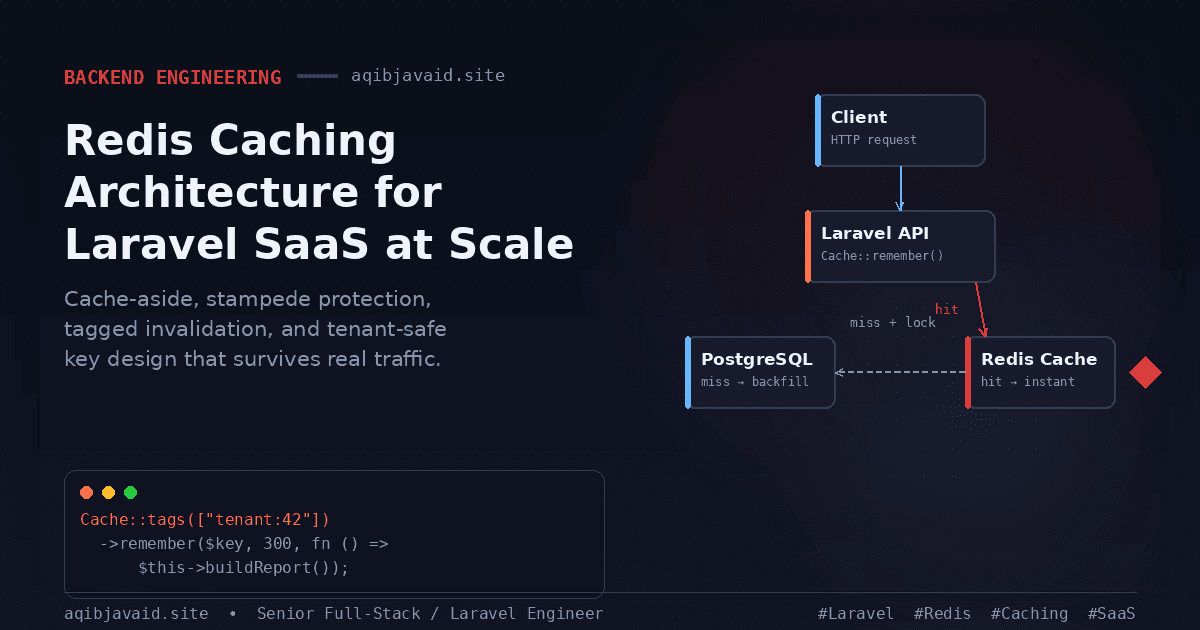
Redis Caching Architecture for Laravel SaaS at Scale
A cache with no invalidation story isn't a performance win. It's stale data waiting to embarrass you in front of a customer.
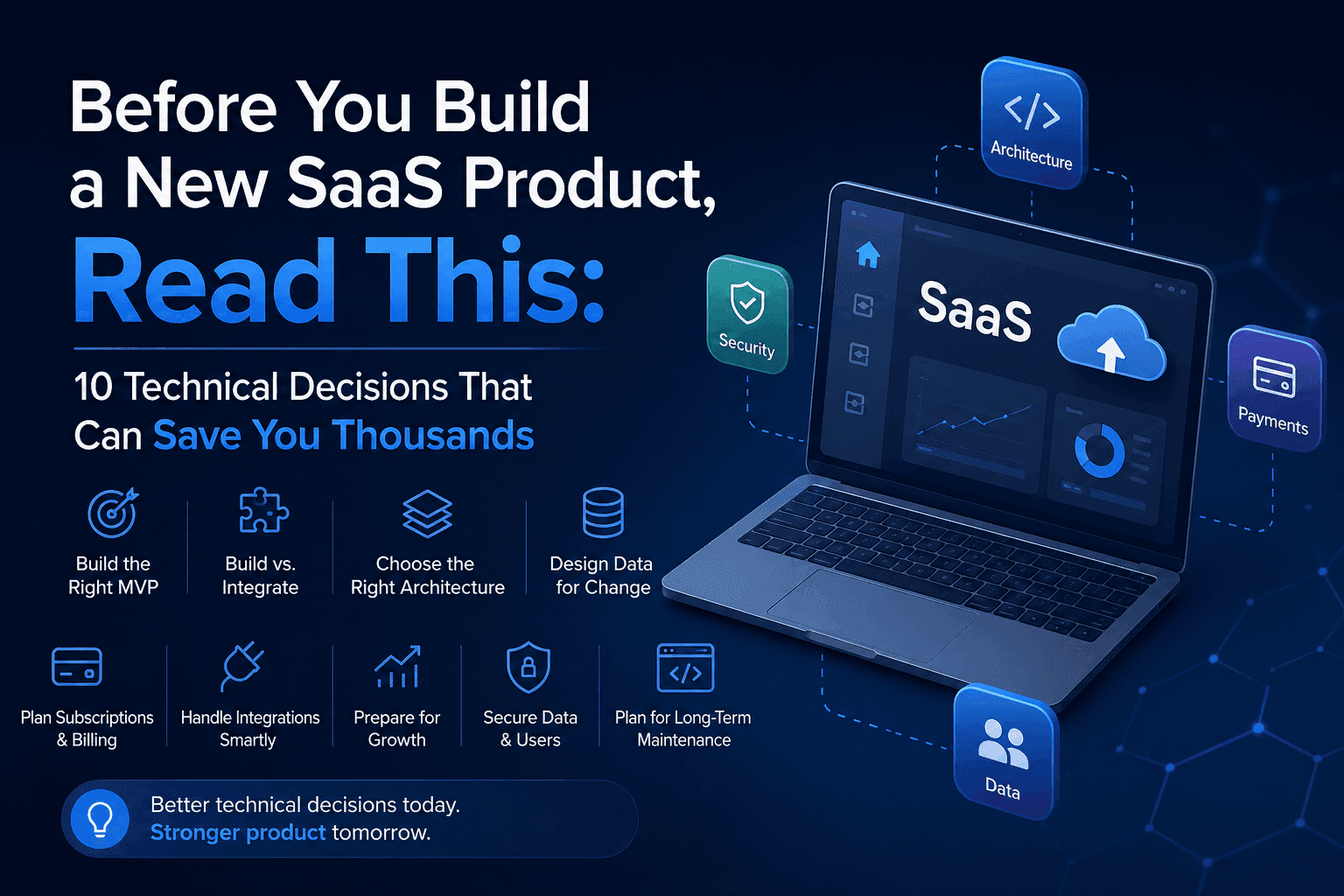
Before You Build a New SaaS Product: 10 Technical Decisions That Can Save You Thousands
The most expensive SaaS mistakes often happen before development begins. These 10 technical decisions can save you time, money, and costly rebuilds.
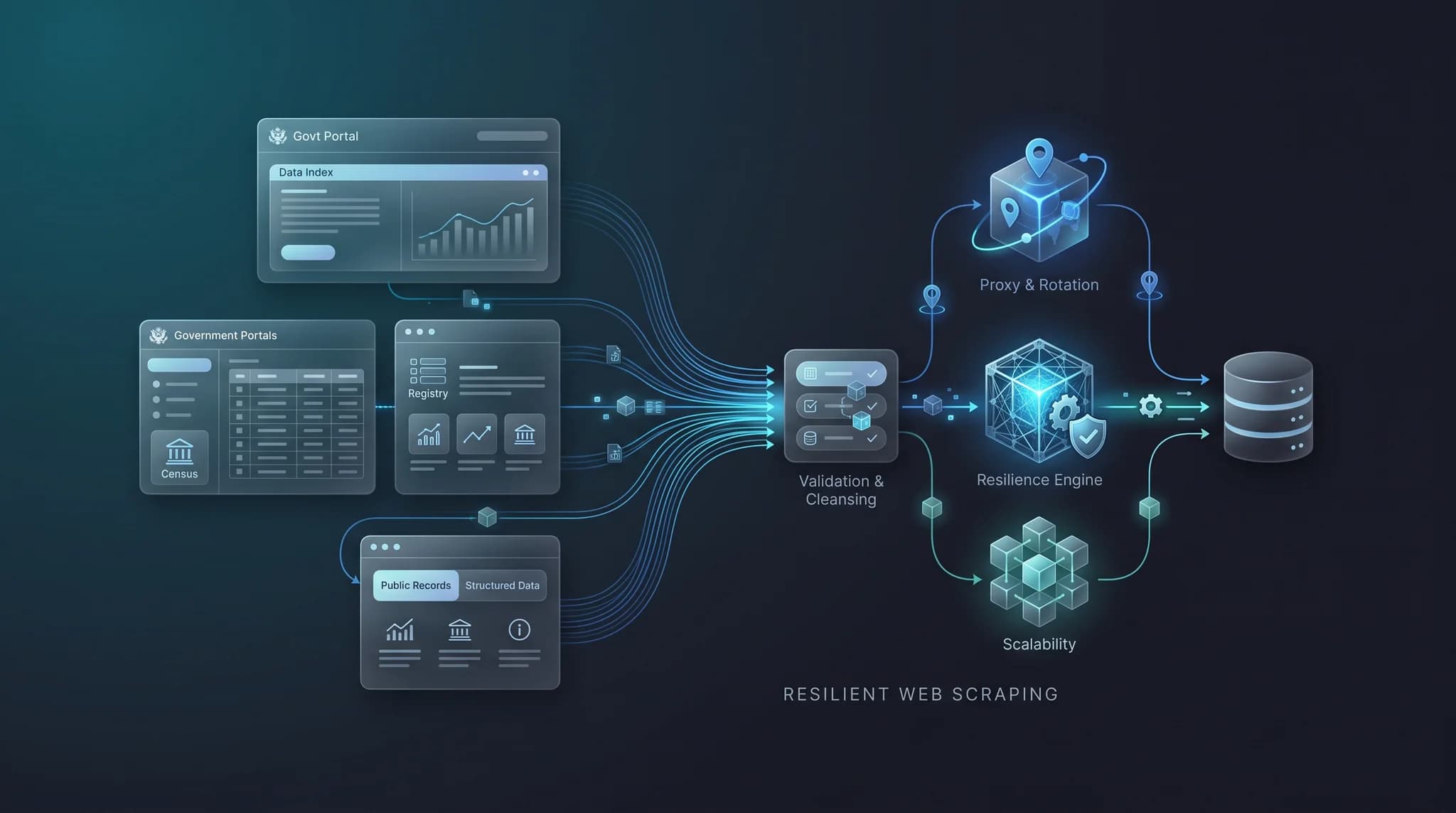
How I Built a Resilient Web Scraping System for Complex Government Data Sources
A real-world look at how I designed a resilient web scraping system for Violerts to collect, normalize, and manage data from complex government sources.
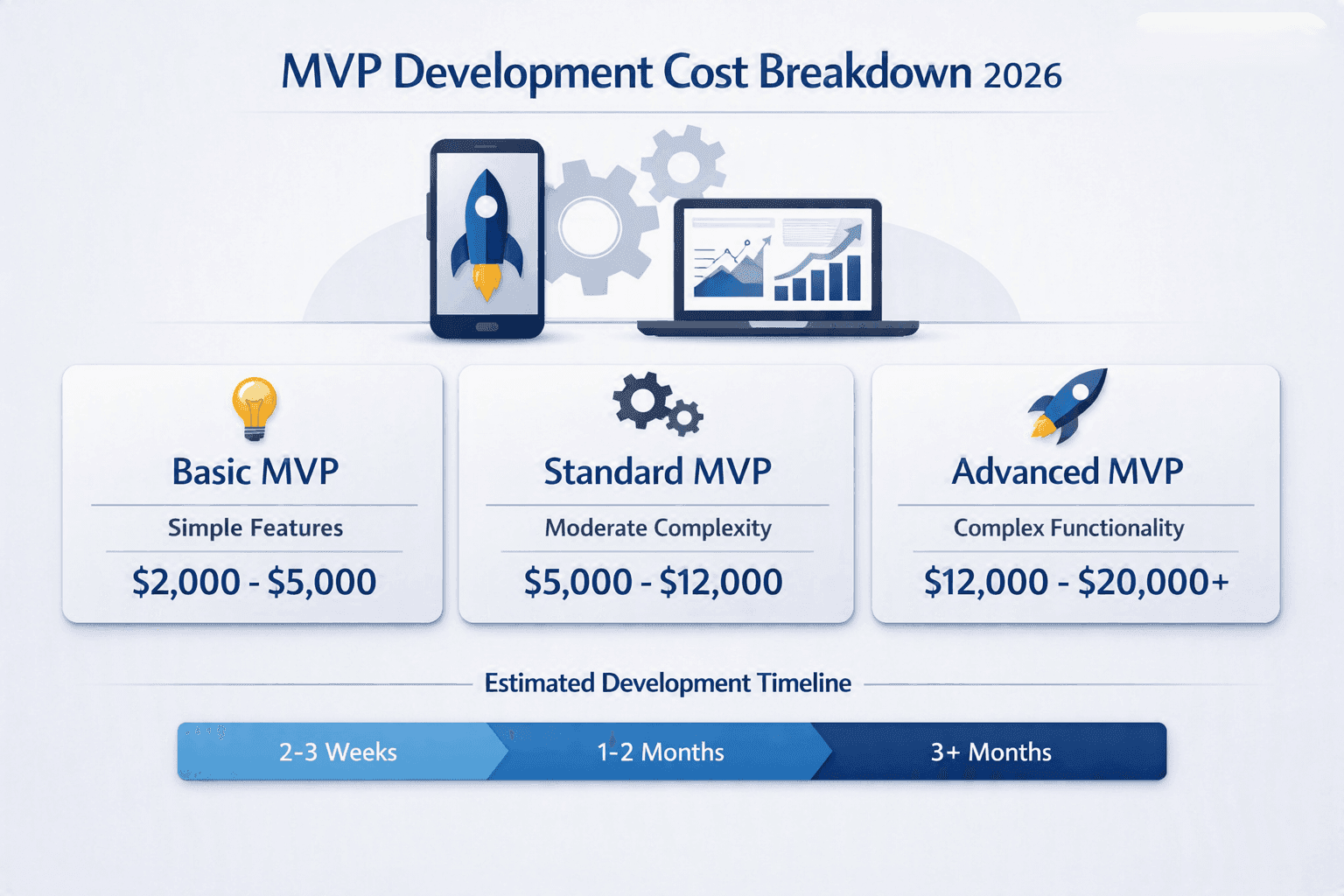
How Much Does It Cost to Build an MVP in 2026?
A custom MVP does not have to cost $50K+. Here is what you can realistically build for $2K, $5K, $10K, and $20K in 2026.