

There is a massive gap between knowing how a system should work and keeping it running in production.
You can read about Laravel architecture, API design, database optimization, or React performance for hours. But real engineering begins when an application handles real users, uncleaned legacy data, unpredictable network latencies, and hard launch deadlines.
After more than eight years shipping and scaling full-stack applications, APIs, databases, and SaaS platforms, one pattern is consistent: the most valuable technical lessons never come from framework documentation alone. They come from diagnosing failures where the obvious textbook answer falls apart.
Production Changes How You Solve Problems#
Early in development, it is easy to treat software as a linear checklist: wire up the route, write the query, render the UI, and deploy. Production quickly breaks that illusion.
A feature is not finished simply because it passes in local development. Real systems require answering less comfortable questions:
- Latency Cascades: What happens when an external endpoint hangs for 10 seconds under peak traffic?
- Data Scale: How does an unindexed query perform when a table scales from 10,000 to 5,000,000 rows?
- Race Conditions: What occurs when two concurrent webhooks attempt to mutate the same billing state simultaneously?
- System Evolution: How isolated is a quick architectural decision when business requirements pivot six months later?
Engineering value lives in the answers to those questions not in the syntax of a framework.
My work spans backend systems, frontend applications, API integrations, and full infrastructure lifecycles. That range has reinforced a simple principle: look beyond the immediate implementation and engineer for the system around it.
Dependencies Need Boundaries, Not Just HTTP Calls#
A recurring lesson from complex integrations is that an external service is never just an endpoint.
While engineering a logistics quoting engine integrated with carriers like UPS and FedEx, the initial functional requirement was straightforward:
Send package dimensions -> fetch rates -> display options to the customer.
In a live production environment, carrier APIs occasionally timeout, return malformed responses, or experience regional latency spikes. If an application treats third-party endpoints as simple synchronous calls, an upstream hiccup can cascade into stalled worker queues, locked database transactions, and abandoned checkouts.
Treating external dependencies properly means wrapping them in defensive boundaries:
- Implementing aggressive timeout and retry policies with exponential backoff.
- Offloading non-critical fetches to asynchronous background workers.
- Isolating third-party contracts behind internal interfaces so vendor changes never leak into core business logic.
- Providing immediate fallback states so a single provider failure never brings down the checkout flow.
AI Integration is an Architectural Challenge, Not an API Call#
The same engineering discipline applies to modern AI applications. Pointing a service to an LLM endpoint is easy; building reliable, deterministic software around probabilistic outputs is hard.
Working on platforms like SafetySpace which integrates automated compliance workflows, structured SOP generators, and LLM pipelines the critical questions were never about making raw HTTP calls to model providers.
The real engineering challenges centered on the surrounding harness:
- Workflow Isolation: Deciding strictly which parts of a workflow remain deterministic code versus model generation.
- Context Design: Structuring dynamic context windows so outputs remain consistent without blowing through token limits.
- Failure Handling: Managing schema drift, hallucinations, and fallback UI states gracefully when generated output fails validation.
- Security & Multi-Tenancy: Ensuring model interactions strictly respect application permissions, tenancy boundaries, and audit logs.
AI is a component within a software system it is not a substitute for solid architecture.
Performance: Measure Before Optimizing#
Performance issues are rarely isolated bugs; they are usually symptoms of systemic bottlenecks across the stack. A sluggish interface might stem from:
- Inefficient database queries and missing composite indexes.
- N+1 query execution loops hidden behind ORM abstractions.
- Unnecessary client-side re-renders and bloated asset bundles.
- Misconfigured reverse proxy caches or server resource constraints.
Don't optimize what you haven't measured.
It is easy to spend days refactoring a clean piece of application code that contributes less than 2% to total response latency, while ignoring an unindexed join or a blocking network call. Good engineering starts by profiling real execution metrics across the database, application runtime, and server infrastructure before changing a single line of code.
Technical Decisions Are Always Trade-Offs#
Production rarely presents clean, binary choices. Every architectural decision carries a cost:
- Choosing asynchronous job queues introduces operational visibility requirements.
- Denormalizing tables speeds up reads but increases write complexity and data drift risks.
- Introducing microservices solves team boundaries but dramatically increases network and deployment overhead.
Good engineering is not about adopting the most complex technology available. It is about selecting the appropriate level of complexity for the problem, team, and budget constraints at hand.
How I Approach Case Studies#
When documenting technical work across projects like Violerts or Azark, I avoid superficial feature lists and focus on five core realities:
- The Actual Problem: Looking past the initial feature request to identify the root operational bottleneck or system inefficiency.
- The Constraints: Dealing with live legacy databases, strict budget caps, uptime requirements, or immovable third-party APIs.
- The Architectural Trade-Offs: Explaining why a specific tool or design pattern was selected over simpler or more complex alternatives.
- The Failures & Surprises: Documenting the edge cases, query bottlenecks, or integration failures that surfaced mid-flight and how they were resolved.
- The Measurable Outcome: Demonstrating clear improvements in latency, throughput, reliability, or maintainability.
The Real Value of Experience#
Frameworks evolve, libraries get replaced, and development tools change. The fundamentals remain constant:
- Understand the core problem before writing code.
- Respect system constraints and design for failure.
- Measure bottlenecks before attempting optimization.
- Keep architectural complexity under control.
This portfolio is not just a catalog of technologies. It is a record of how I approach engineering challenges, make deliberate trade-offs, and build reliable software that performs in production.
Share this technical insight with your network
Share to LinkedIn or Facebook with key takeaways, featured media, and direct links.
Related Technical Articles
View all articles →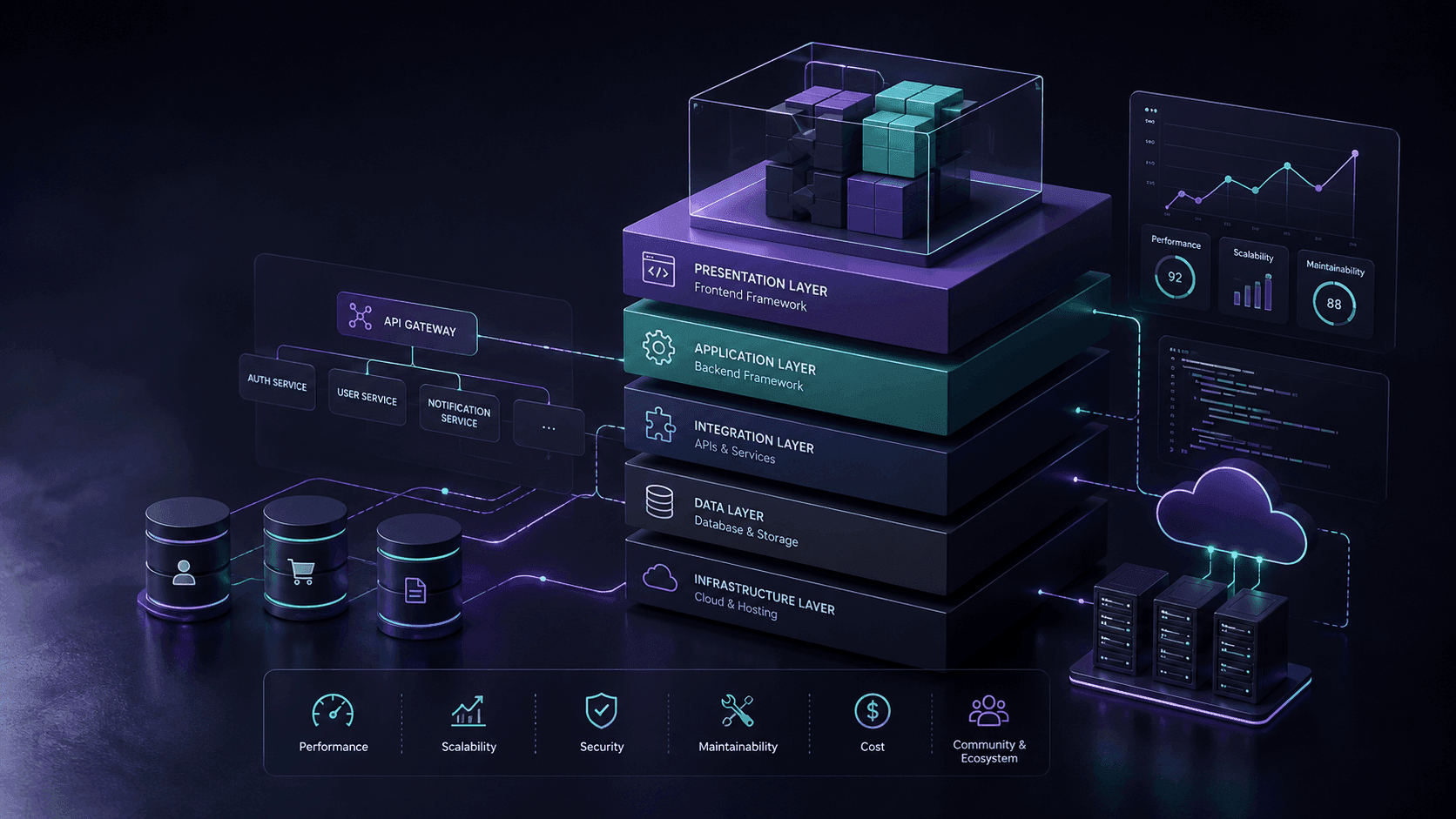
Choosing a Web Development Framework in 2026
Choosing the right web development framework can shape your application's performance, scalability, maintainability, and long-term cost. This guide compares modern frameworks and the factors that actually matter when selecting one for a real-world project.
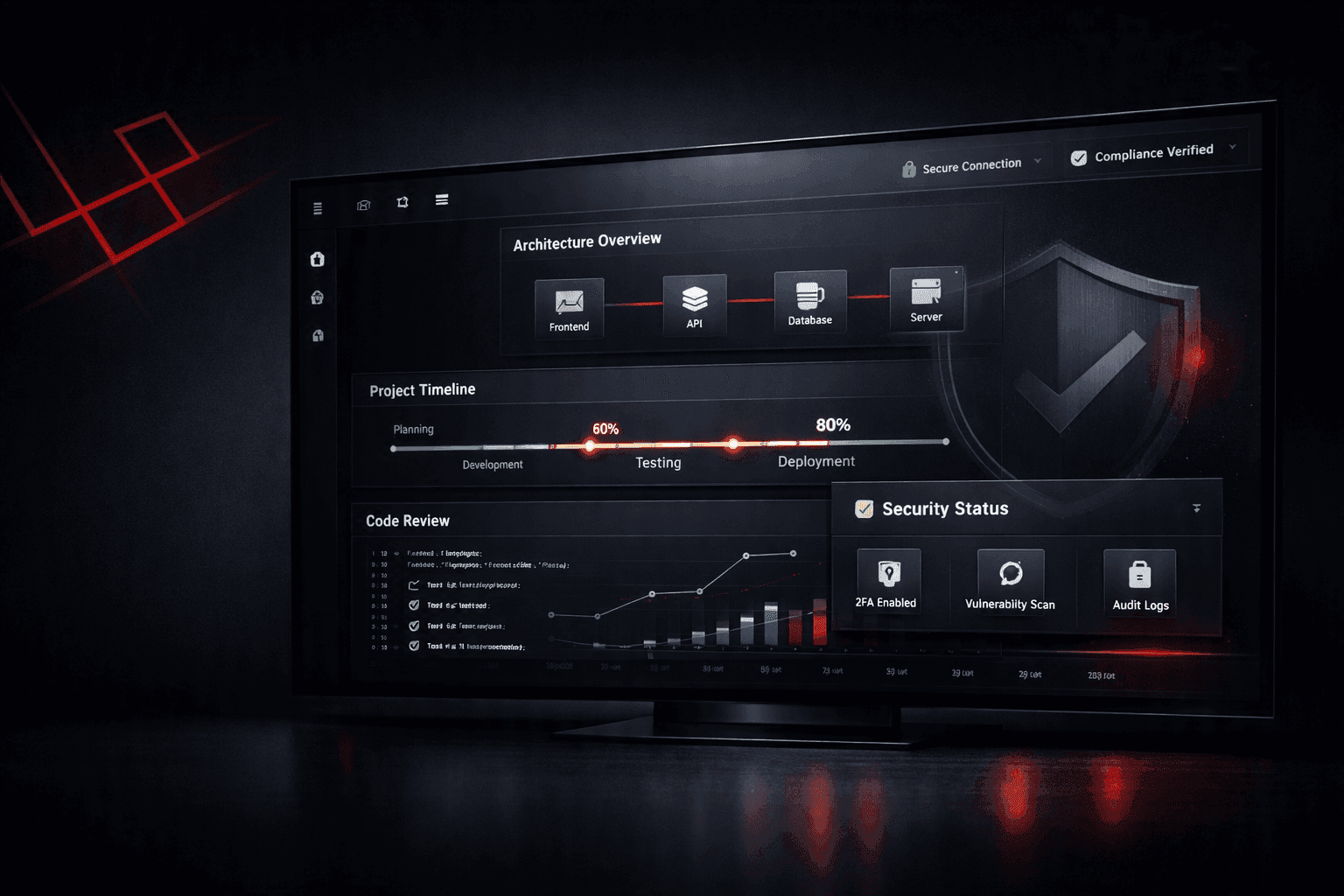
How a Laravel Consultant Keeps Projects Transparent
Clients don't just need a Laravel developer who can write code. They need confidence that their project is progressing, risks are being managed, and sensitive data is protected. Here's how I approach transparency, communication, documentation, and security when building Laravel applications.
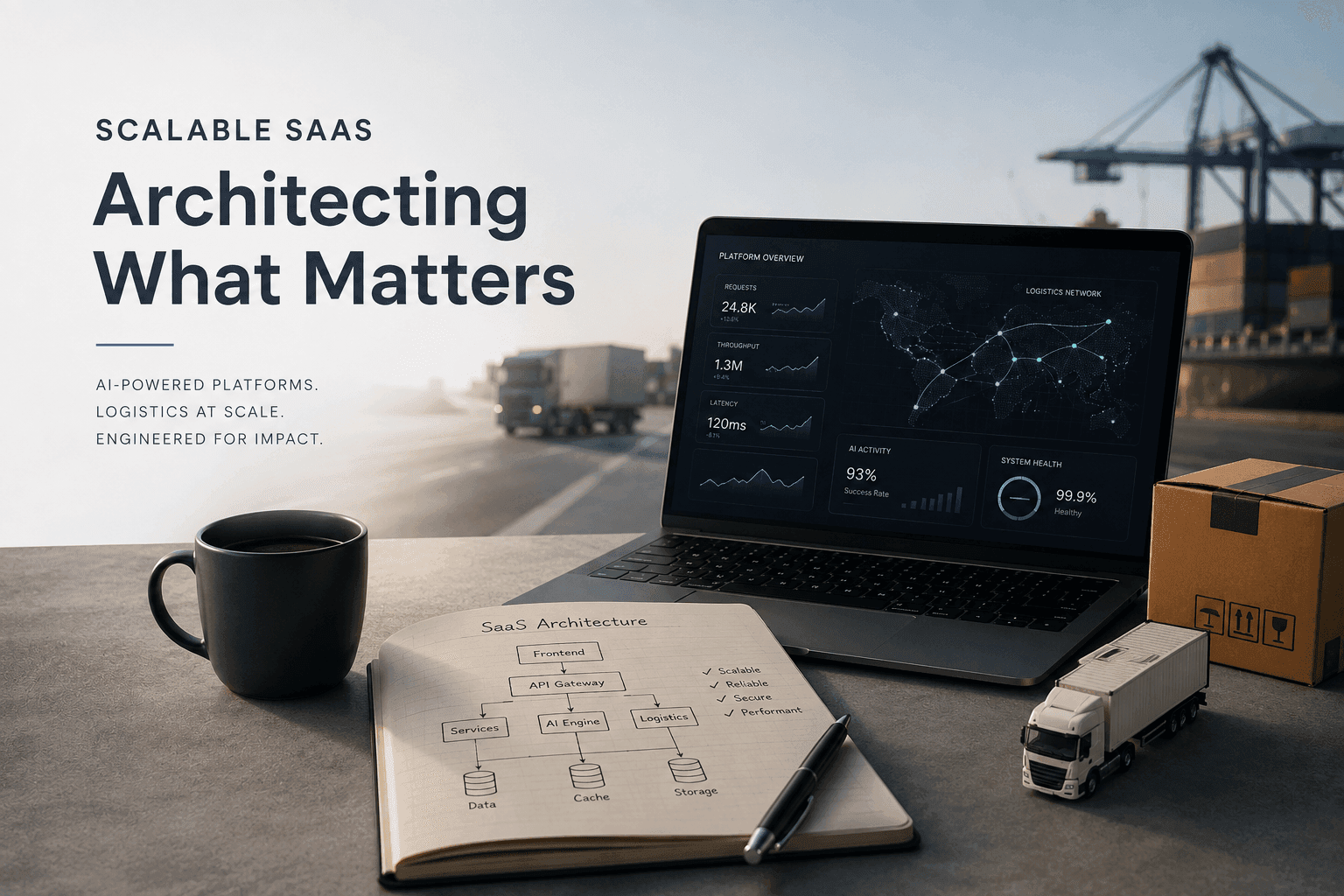
Scalable SaaS Architecture with Laravel & Next.js
Discover how to build high-performance, AI-integrated SaaS solutions. From mitigating LLM hallucinations to optimizing Laravel and Next.js performance, learn the architectural patterns that drive results.
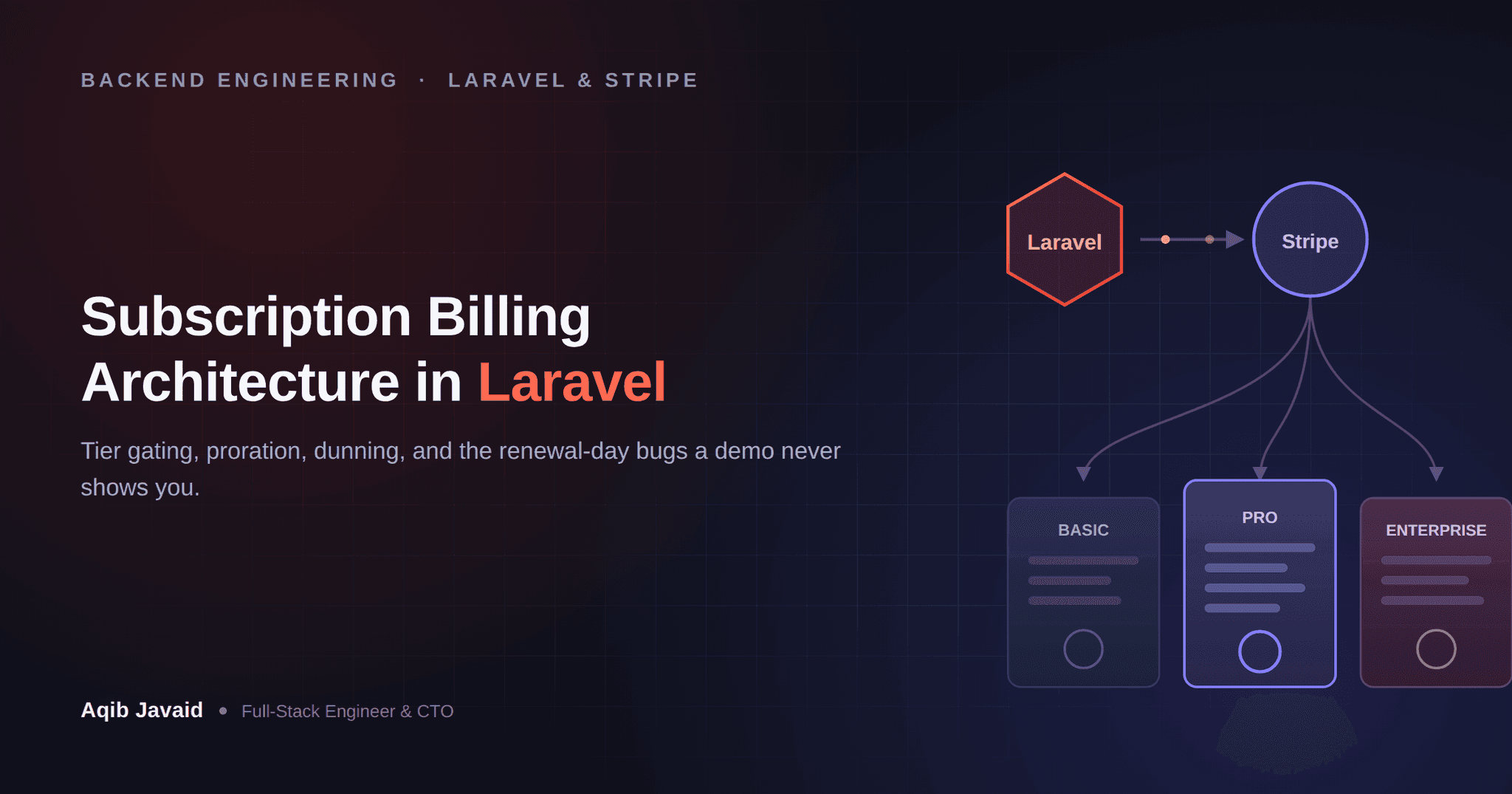
Subscription Billing Architecture in Laravel: Building Tier-Based SaaS Pricing That Survives Renewals, Downgrades, and Failed Cards
Charging a card once is easy. Charging the right amount, on the right day, for a plan that changed twice last month that's the real billing problem.
Have a complex technical project in mind?
Available for full-stack engineering, performance audits, cloud deployments, and high-concurrency systems architecture.