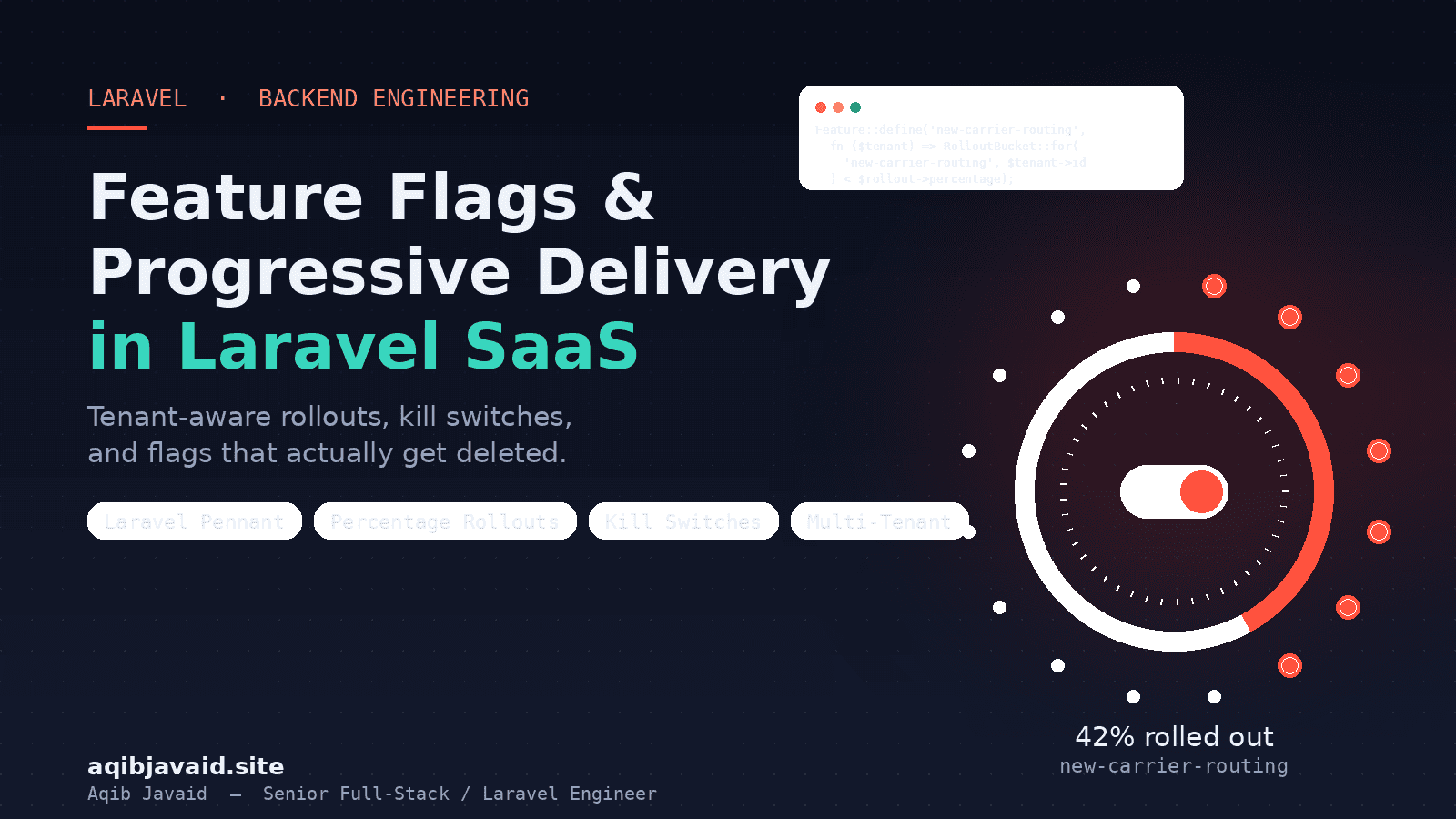
Feature Flags & Progressive Delivery in Laravel SaaS
Shipping behind an if statement isn't a rollout strategy. Here's how flags become an actual release mechanism instead of permanent code debt.
Production Laravel architecture: queues, caching, search, observability, testing and the patterns that keep PHP applications fast and maintainable.
Showing 6 of 9 articles

Shipping behind an if statement isn't a rollout strategy. Here's how flags become an actual release mechanism instead of permanent code debt.

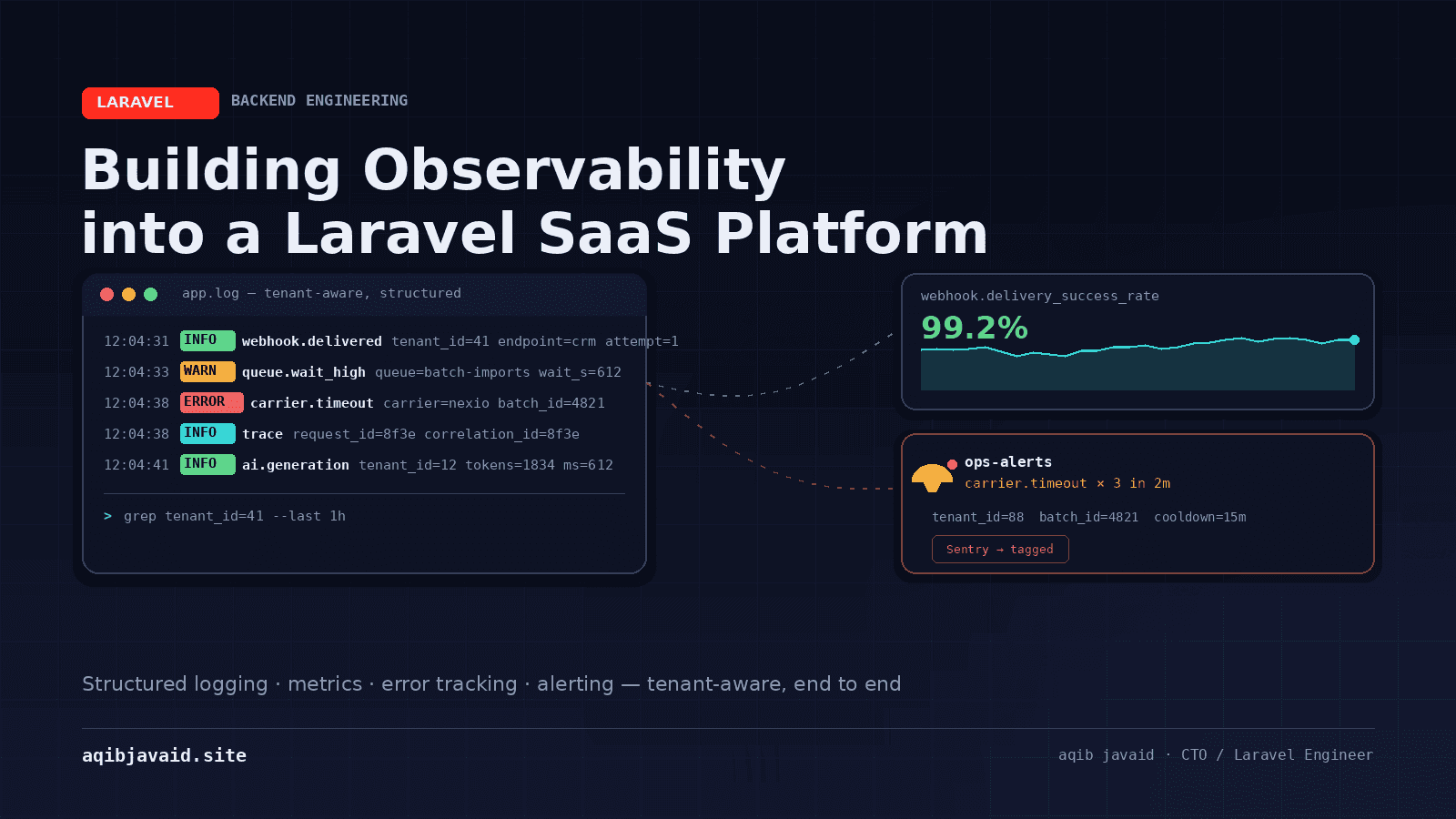
A stack trace tells you what broke. It doesn't tell you which tenant, which request, or whether it's still happening right now.

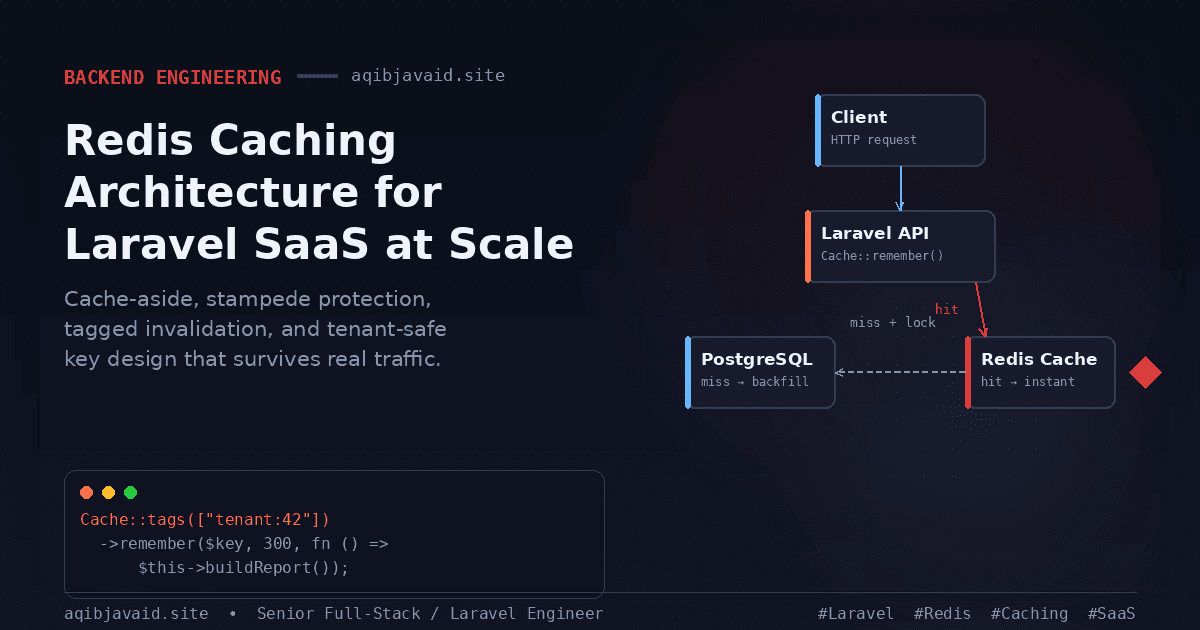
A cache with no invalidation story isn't a performance win. It's stale data waiting to embarrass you in front of a customer.

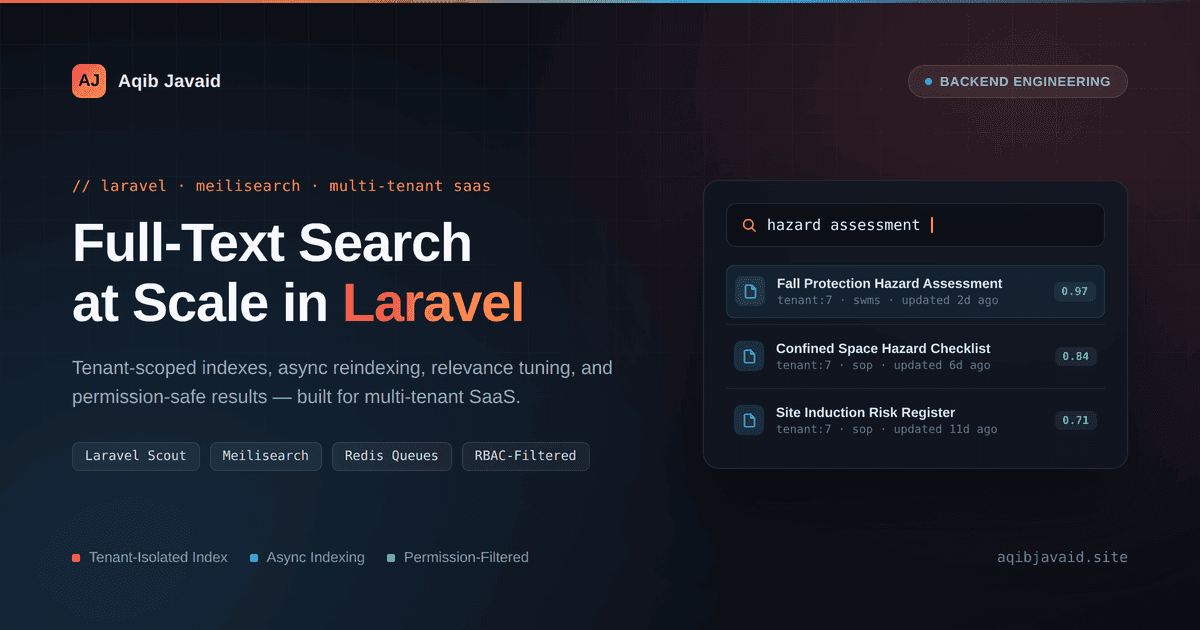
WHERE title LIKE '%term%' works until customers expect search that's fast, relevant, and never leaks another tenant's records.

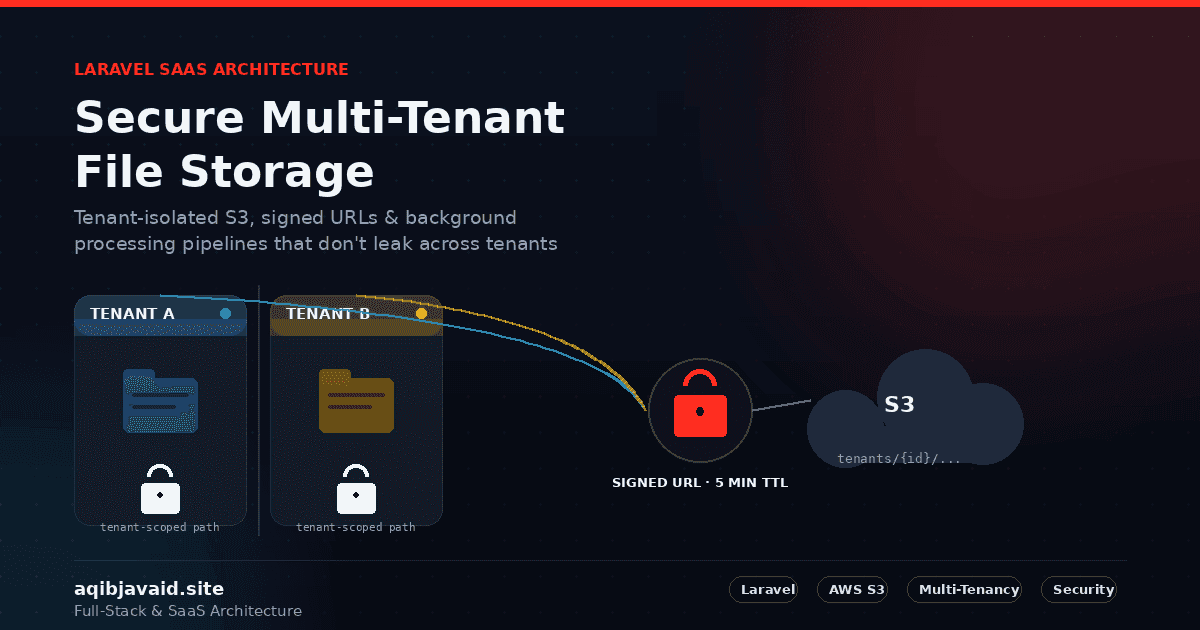
A public S3 bucket and a predictable file path is how one tenant's uploads end up in another tenant's browser tab.

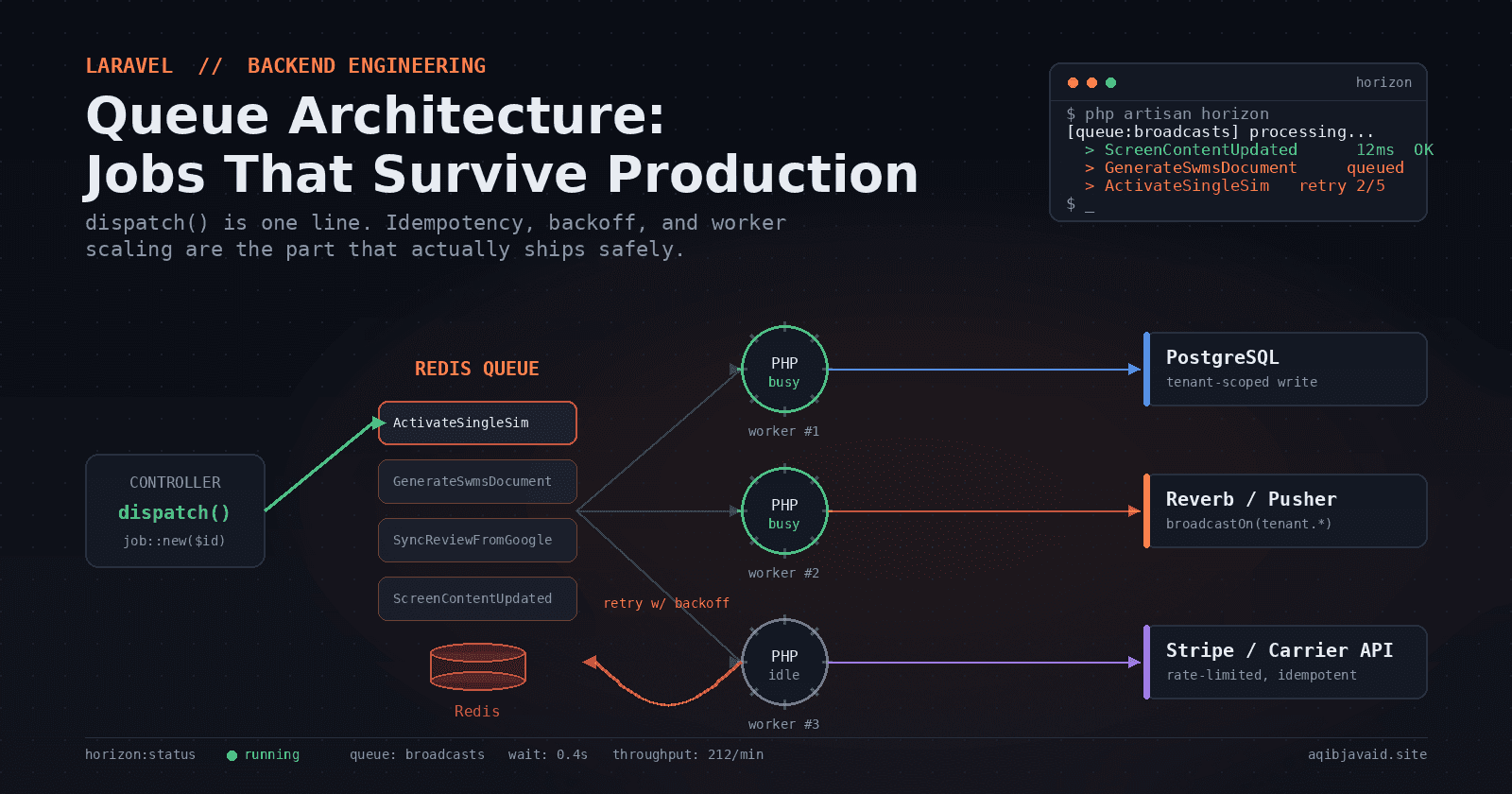
dispatch() is one line. Making that job safe to retry, cheap to scale, and impossible to double-run is the actual engineering problem.
Scroll down to load automatically
These articles come from building and maintaining Laravel applications in production: SaaS platforms, logistics systems and data-heavy products that have to keep working as they grow.
The focus is on the decisions that matter after the tutorial ends: how to structure queues so jobs never silently fail, where caching helps and where it causes bugs, how to add search and observability without slowing the app down, and how to test the parts that handle money and data.
If you're planning a Laravel project or need help with an existing one, see my Laravel & PHP development service. For slow queries and scaling problems, database optimization is the better fit. You can also book a free 30-minute call to talk it through.