

If you are planning a marketplace, the first question is almost always the same: what does marketplace website development cost? The honest answer is that the price is driven by a handful of decisions that have nothing to do with how the site looks. Payments between three parties, trust and safety, search, messaging and admin tooling are where the budget goes.
I'm Aqib Javaid, a senior full-stack engineer, and I've built marketplace-style platforms where money, content and multiple user roles all have to work together. This guide breaks down what actually moves the cost, gives rough planning ranges by scope, and shows where founders overspend. The ranges are planning estimates, not quotes. A real number needs a scoped spec.
What makes a marketplace more expensive than a normal website?#
A brochure site has one audience. A marketplace has at least three: buyers, sellers (or vendors, or service providers) and you, the operator. Every feature has to be built three times over, once for each side's view and permissions.
Four things separate a marketplace from a typical web app:
- Split payments. Money goes from buyer to seller, minus your commission, and sometimes with refunds, disputes and payouts on a schedule.
- Two-sided accounts. Sellers need onboarding, profiles, listings and dashboards. Buyers need search, favourites, orders and messaging.
- Trust and moderation. Reviews, reporting, listing approval and admin controls are not optional once real strangers transact.
- Liquidity tooling. Search, filters, notifications and email flows that bring both sides back.
None of these are exotic, but each one adds weeks, and they interact. That is why a "simple Airbnb for X" is rarely simple.
How much does a marketplace cost at different scopes?#
Treat these as rough planning ranges for a senior engineer or small team building a custom product. Agency rates, location and team size will move them in either direction.
| Scope | What is included | Typical planning range |
|---|---|---|
| Validation MVP | One listing type, simple seller profiles, basic search, one payment flow, admin panel | $15,000 to $35,000 |
| Launch-ready marketplace | Seller onboarding, split payments with payouts, messaging, reviews, email notifications, admin moderation | $35,000 to $80,000 |
| Scaled platform | Multi-language, real-time messaging, advanced search, multiple payment methods, analytics, mobile apps | $80,000 and up |
The wide spread exists because "marketplace" covers a services board and a full multi-vendor commerce platform equally. If you are still deciding what to include in version one, the same logic I use in the SaaS MVP development cost breakdown applies here: build the smallest thing that proves buyers and sellers will actually transact.
Where does the money actually go?#
On a typical build, I see the budget split roughly like this: payments and payouts, seller onboarding and dashboards, search and listings, messaging and notifications, admin and moderation, then design and QA. Payments are consistently the line founders underestimate.
Payments and payouts#
Taking one payment is a day of work. Taking a payment, holding the platform fee, paying the seller later, handling refunds and reconciling it all is a project. Stripe's own Connect marketplace documentation is the right place to see how fund flows work, and the choice of charge type changes who is liable for disputes and refunds. Decide this before you design the seller dashboard, because it shapes the whole data model.
Advertisement
On the Imperial Votes platform, the payment logic had to support different countries, currencies and payment gateways, alongside organizer dashboards and paid voting. Multi-gateway support was a major part of the work, not an afterthought.
Multi-language and localisation#
If your marketplace serves more than one country, translation becomes a content system, not a plugin. On Planuojam, a multilingual event planning marketplace, we rescued a failing platform by building a headless marketplace in Next.js and Strapi 5 that supports five languages, real-time messaging and Stripe payments. We added an AWS Translate-powered engine in Strapi to automate nested content localisation while preserving SEO integrity. Strapi's internationalization docs cover the baseline, but anything beyond the baseline takes custom work, and it should be priced in.
Messaging and notifications#
Buyer-to-seller messaging looks small on a feature list. Real-time delivery, unread counts, email fallbacks and abuse controls make it a mid-sized feature. If you can launch with a simple contact form and add live chat once you have traffic, you save real money.
Admin and moderation#
Founders forget that they are the third user. You need to approve sellers, remove listings, handle refunds, see payouts and export reports. A weak admin panel turns every support request into a developer ticket.
Build custom, use a SaaS platform, or start with a plugin?#
Not every marketplace needs custom code on day one.
| Approach | Best for | Trade-off |
|---|---|---|
| Marketplace SaaS or plugin | Testing demand quickly with standard flows | Limited customisation, fees, and you may outgrow it |
| Custom build on a proven stack | Unique workflows, multiple payment rules, SEO-led growth | Higher upfront cost, full control |
| Hybrid: CMS plus custom app | Content-heavy marketplaces needing editorial control | Needs good architecture so the pieces stay in sync |
My rule of thumb: if your differentiator is the workflow or the pricing model, build custom. If your differentiator is supply or community, test with an off-the-shelf tool first. For the stack itself, I usually reach for Next.js and React on the front end with a Laravel or Strapi backend, depending on whether the product is application-heavy or content-heavy. The Next.js documentation is a good starting reference for what the framework handles out of the box.
If the platform will have subscriptions, tiers or multiple organisations on it, read the multi-tenant database trade-offs before you commit to a data model. Changing it later is expensive. Our SaaS development service covers exactly this kind of architecture work.
How can you reduce marketplace development cost without cutting corners?#
- Pick one side to serve first. Launch with a supply you personally curate, so you don't need full seller self-service on day one.
- Keep one payment method and one currency until revenue proves you need more.
- Use managed services for email, search and file storage instead of building them.
- Delay the mobile apps. A responsive web app validates demand for a fraction of the price. The mobile app development cost guide shows when native is worth it.
- Write the spec before you hire. Most budget overruns come from features added mid-build, not from the original scope.
- Budget for after launch. Plan for hosting, fixes and iteration from the start.
Before you ask for quotes, write one page describing who pays whom, when, and who handles a refund. That one page removes more estimate variance than any feature list.
When should you not build a custom marketplace?#
Skip the custom build if you have no proof that sellers will list and buyers will pay. A spreadsheet, a form and manual payouts can validate demand for almost nothing. I would rather you spend $2,000 learning that the idea doesn't work than $50,000 finding out after launch.
Also avoid building if a niche Shopify store or WooCommerce setup already covers your model. Our custom versus Shopify comparison explains where that line sits for commerce-style products.
Frequently asked questions#
How long does it take to build a marketplace?#
A focused validation MVP usually takes two to three months with a small team. A launch-ready platform with split payments, messaging and moderation more often takes four to six months. Multi-language or mobile app scope extends that.
What are the ongoing costs after launch?#
Expect hosting, third-party fees (payment processing, email, maps or search), security updates and a steady stream of improvements. Plan a monthly maintenance budget rather than treating launch as the finish line.
Can I build the marketplace in phases?#
Yes, and I recommend it. Phase one proves transactions work. Phase two adds the features that raise retention, such as reviews and messaging. Phase three scales with localisation or mobile.
Do I need a developer or an agency?#
For a focused MVP, a senior full-stack engineer is often faster and cheaper than an agency because there are fewer handoffs. Larger platforms with design, QA and project management needs may justify a team.
Key takeaways#
- Marketplace cost is driven by payments, two-sided accounts, moderation and admin tooling, not by page design.
- Planning ranges run from roughly $15,000 for a validation MVP to $80,000 and up for a scaled, multi-language platform.
- Decide your payment model (who holds funds, who handles refunds) before you design anything else.
- Validate demand manually first, then build only the side of the marketplace you need to start transacting.
- Write a one-page spec of the money flow before requesting quotes.
If you are scoping a marketplace and want a realistic number, book a call and I'll walk through your requirements with you.
Share this technical insight with your network
Share to LinkedIn or Facebook with key takeaways, featured media, and direct links.

About the author
Aqib Javaid
Senior Full-Stack Engineer
8+ years building Laravel, React/Next.js and AI-powered products for startups and growing businesses - SaaS platforms, APIs, integrations and the performance work that keeps them fast. Read the case studies to see how that plays out on real projects.
4.9 from 76 client reviews
Case Study: Planuojam - Multilingual Event Planning Marketplace
Rescued a failing event platform by architecting a robust headless marketplace supporting five languages, real-time messaging, and Stripe payments. Engineered a custom AWS Translate-powered engine in Strapi 5 to automate complex nested content localization while preserving SEO integrity.
Related Technical Articles
View all articles →SaaS MVP Development Cost: What to Budget Before You Build
What goes into the cost of a SaaS MVP, which features quietly inflate it, and how to scope a first version that proves demand without burning your budget.

Mobile App Development Cost: What a Business App Really Takes
Mobile app development cost depends less on screens and more on the backend, payments, maps and background features. Here are realistic budget tiers, where budgets go wrong, and how to cut cost safely.
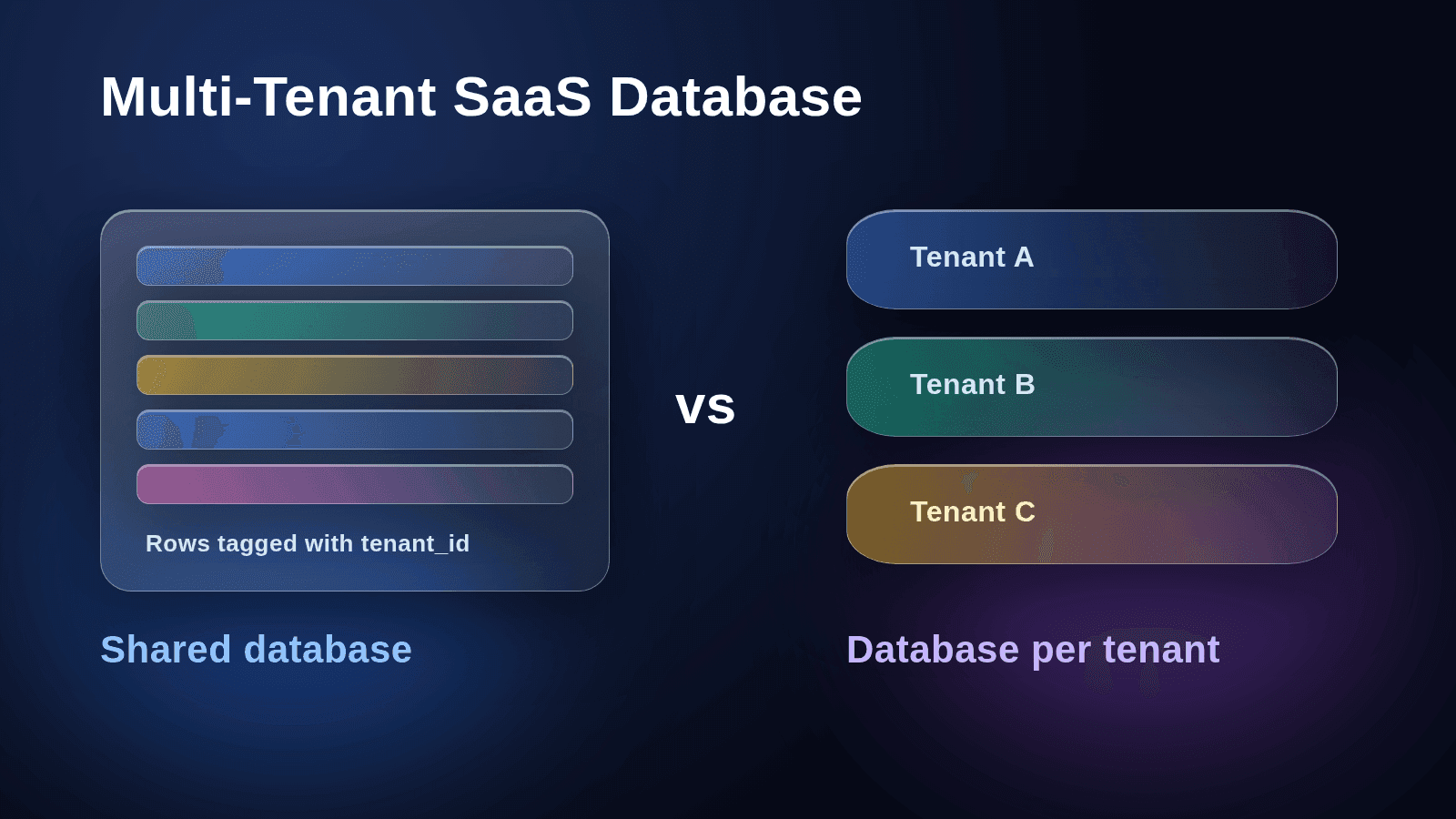
Multi-Tenant SaaS: Shared Database or One Per Tenant?
Shared database or database per tenant? Compare the three multi-tenant SaaS data models, learn how to choose, and see the safeguards that keep customer data separate.
Shopify vs Custom Ecommerce: When Custom Is Worth It
Shopify or a custom ecommerce build? A plain comparison of cost, control and integrations, the situations where custom pays off, and a three-year cost method plus a checklist to decide.
Have a complex technical project in mind?
Available for full-stack engineering, performance audits, cloud deployments, and high-concurrency systems architecture.