

Introduction: The Integration Works - Until It Doesn't#
Every third-party API integration demo looks the same. You call the endpoint, you get a clean JSON response, you map it to your database, you ship it. It works in the sandbox. It works in the demo to the client. Everyone's happy.
Then, six weeks later, FedEx changes a response field. Stripe retries a webhook you already processed and your billing system charges a customer twice. OpenAI times out under load and your support queue fills up with "the AI isn't responding" tickets. None of that showed up in the happy-path demo, because the happy path was never the hard part.
Over 8+ years building production systems in Laravel & PHP, React, and Vue - including a logistics platform pulling live rates from FedEx and UPS, a SaaS product built on Stripe subscriptions, an AI safety platform wired into OpenAI, and a reputation management tool syncing daily against the Google Business Profile API - I've learned that the actual work of "integrating an API" is barely about the API call. It's about everything you build around that call to make it survive contact with the real world: rate limits, partial failures, schema drift, retries, and the day the third party's status page goes red and yours can't.
This article is a practical breakdown of the architectural patterns that separate an integration that works in a demo from one that holds up in production - with real code, not just theory.
Architecture: Designing for a World You Don't Control#
The single biggest mindset shift when integrating a third-party API is this: you do not control their uptime, their latency, their rate limits, or their breaking changes - so your architecture has to assume all four will happen.
1. Never call a third-party API directly from your business logic#
The most common mistake I see in codebases I inherit is a FedexService, StripeService, or OpenAiService class whose methods are called directly from controllers, jobs, and Livewire components scattered across the app. The moment you need to add UPS as a second carrier, add retry logic, or swap providers, you're hunting through a dozen files.
The fix is a thin abstraction layer - an interface your application depends on, with the provider-specific detail hidden behind it:
interface ShippingRateProvider
{
    public function getRates(ShipmentRequest $request): RateQuoteCollection;
}

class FedexRateProvider implements ShippingRateProvider
{
    public function getRates(ShipmentRequest $request): RateQuoteCollection
    {
        $response = Http::retry(3, 200)
            ->timeout(5)
            ->withToken($this->getAccessToken())
            ->post(self::RATE_ENDPOINT, $this->buildPayload($request));

        return RateQuoteCollection::fromFedexResponse($response->json());
    }
}

class UpsRateProvider implements ShippingRateProvider
{
    // Same contract, completely different payload shape underneath
}
When your quoting engine calls ShippingRateProvider::getRates(), it never knows or cares whether it's talking to FedEx, UPS, or a mock in your test suite. This is exactly the pattern that made it possible to run FedEx and UPS side by side in a logistics quoting system I built, aggregate both sets of live rates, and let the business add a third carrier later without touching a single line of quoting logic.
2. Treat authentication as a first-class concern, not a config value#
OAuth2 client-credentials flows, refreshable API keys, and per-request HMAC signatures each fail differently. A token that silently expires mid-request is one of the most common causes of "random" integration failures. Cache the token with a TTL slightly shorter than its actual expiry, and always have a single method responsible for refreshing it:
protected function getAccessToken(): string
{
    return Cache::remember('fedex_access_token', now()->addMinutes(55), function () {
        $response = Http::asForm()->post(self::AUTH_ENDPOINT, [
            'grant_type' => 'client_credentials',
            'client_id' => config('services.fedex.client_id'),
            'client_secret' => config('services.fedex.client_secret'),
        ]);

        return $response->json('access_token');
    });
}
3. Design for idempotency from day one#
This is the pattern that matters most and gets skipped most often. Any webhook, retry, or network hiccup can cause the same event to arrive twice. If a payment webhook triggers a subscription upgrade, and that webhook is delivered twice - which providers like Stripe explicitly warn you it will be - you need a guarantee that processing it twice produces the same result as processing it once.
Route::post('/webhooks/stripe', function (Request $request) {
    $event = Webhook::constructEvent(
        $request->getContent(),
        $request->header('Stripe-Signature'),
        config('services.stripe.webhook_secret')
    );

    // The idempotency key, not the event type, is what protects you
    if (ProcessedWebhookEvent::where('event_id', $event->id)->exists()) {
        return response()->json(['status' => 'already_processed']);
    }

    DB::transaction(function () use ($event) {
        ProcessedWebhookEvent::create(['event_id' => $event->id]);
        // ... handle the event
    });

    return response()->json(['status' => 'ok']);
});
Verifying the webhook signature is step one; recording that you've already handled that exact event ID is what actually prevents the double-charge.
Step-by-Step: Building a Resilient Integration#
Here's the sequence I follow for any new third-party API integration, whether it's a shipping carrier, a payment processor, or an AI provider:
- Isolate it behind an interface first, before writing a single line against the real API. Define what your application needs from the provider in your own vocabulary, not theirs.
- Add timeouts and retries with backoff, never a bare HTTP call. A hanging third-party request without a timeout will eventually exhaust your worker pool.
- Build a queued retry path for anything non-urgent. If a request to sync a review from the Google Business Profile API fails, it doesn't need to block a page load - it needs to go back on a queue with exponential backoff.
- Log the raw response on failure, not just the exception message. Provider error payloads (a FedEx fault code, an OpenAI rate-limit response) carry information your generic exception handler throws away.
- Write a fake/mock provider that implements the same interface, so your test suite and local development never depend on the real API being up.
Queue::push(function () use ($reviewId) {
    try {
        GoogleBusinessApi::syncReview($reviewId);
    } catch (RateLimitException $e) {
        // Release back to the queue with backoff instead of failing silently
        $this->release(now()->addSeconds(30));
    }
})->onQueue('integrations');
This is the same shape of problem whether you're pulling shipping rates, syncing customer reviews, or calling an LLM: isolate, time out, retry intelligently, and always leave a paper trail.
Pitfalls I've Seen Cost Real Time and Money#
A few patterns show up again and again across integrations, regardless of the provider:
Rate limits discovered in production, not in the docs. Google's and most social/business APIs enforce quotas that are easy to miss until you're pulling data for hundreds of business profiles at once and start getting throttled mid-sync. Build backoff and queuing in from the start rather than retrofitting it after your first 429 response.
Webhook replay treated as an edge case instead of the default. Payment and subscription providers will redeliver events. If your webhook handler isn't idempotent, "rare" duplicate processing becomes a recurring support ticket about double billing.
No circuit breaker for degraded third parties. When an upstream AI or data provider slows down instead of failing outright, naive retry logic can pile up requests and take your own application down with it. A simple failure-count threshold that temporarily short-circuits calls to a struggling provider - falling back to a cached response or a graceful "try again shortly" - protects the rest of your app.
Treating the third party's schema as stable. APIs version and evolve. Mapping the raw provider response directly onto your internal models means a provider's field rename becomes your production bug. The RateQuoteCollection::fromFedexResponse() pattern above exists specifically to contain that blast radius to one file.
Skipping structured logging on integration boundaries. When something goes wrong at 2am, the difference between a 10-minute fix and a 3-hour investigation is almost always whether you logged the actual request/response payload at the boundary where your system met theirs.
Key Takeaways#
Third-party APIs are not a feature you "add" - they're a dependency your product now inherits, including that provider's outages, rate limits, and breaking changes. The integrations that hold up in production share the same shape:
- An abstraction layer that hides provider detail behind your own interface
- Idempotent handling of anything that can be retried or redelivered
- Timeouts, retries with backoff, and queued processing for non-urgent calls
- Logging that captures the real payload, not just the exception
- A test suite that runs against a mock provider, not the live API
I've built this pattern into logistics platforms pulling live rates from FedEx and UPS, subscription systems running on Stripe, an AI-powered safety platform built on OpenAI, and a review-management tool syncing continuously against the Google Business Profile API. The provider changes; the underlying discipline doesn't.
If you're planning an integration - or inheriting one that keeps breaking at inconvenient hours - I help SaaS teams and founders design and build API integrations that are engineered to survive production, not just the demo. Get in touch about your integration project or see the full case studies from platforms where these exact patterns are running today.
Share this technical insight with your network
Share to LinkedIn or Facebook with key takeaways, featured media, and direct links.
Case Study: ION DASH - Logistics & Fleet Management Platform
ION DASH was transformed from a legacy delivery application into a modern logistics and fleet management platform combining Flutter Customer and Driver applications with a Laravel backend API. The platform handles custom quotes, automated dispatch, background GPS tracking, delivery confirmation, proof of delivery, Stripe PaymentIntents, Firebase Cloud Messaging, Google Maps navigation, onsite billing, and catalog synchronization.
Related Technical Articles
View all articles →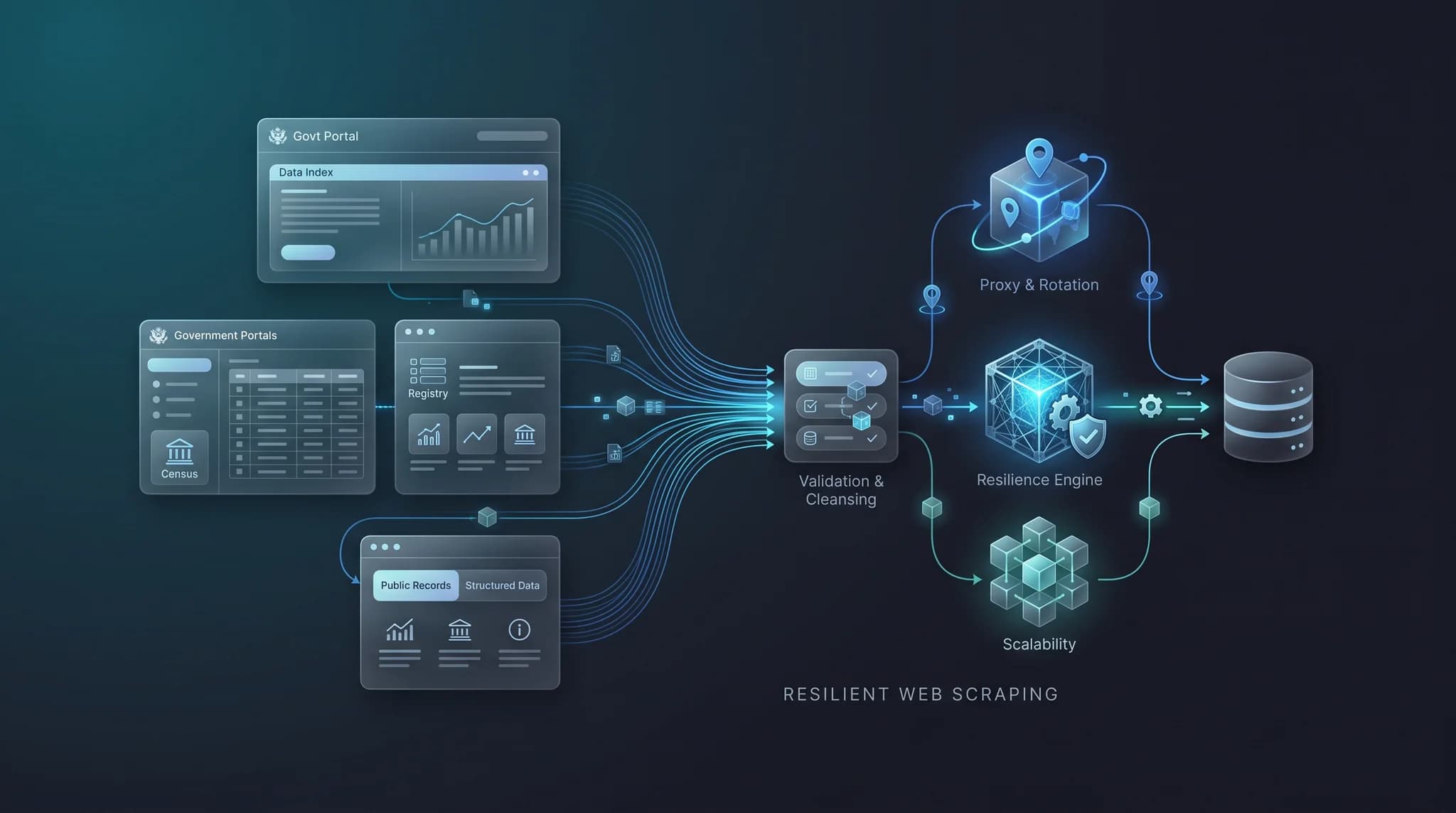
How I Built a Resilient Web Scraping System for Complex Government Data Sources
A real-world look at how I designed a resilient web scraping system for Violerts to collect, normalize, and manage data from complex government sources.

Before You Build a New SaaS Product: 10 Technical Decisions That Can Save You Thousands
The most expensive SaaS mistakes often happen before development begins. These 10 technical decisions can save you time, money, and costly rebuilds.
Have a complex technical project in mind?
Available for full-stack engineering, performance audits, cloud deployments, and high-concurrency systems architecture.