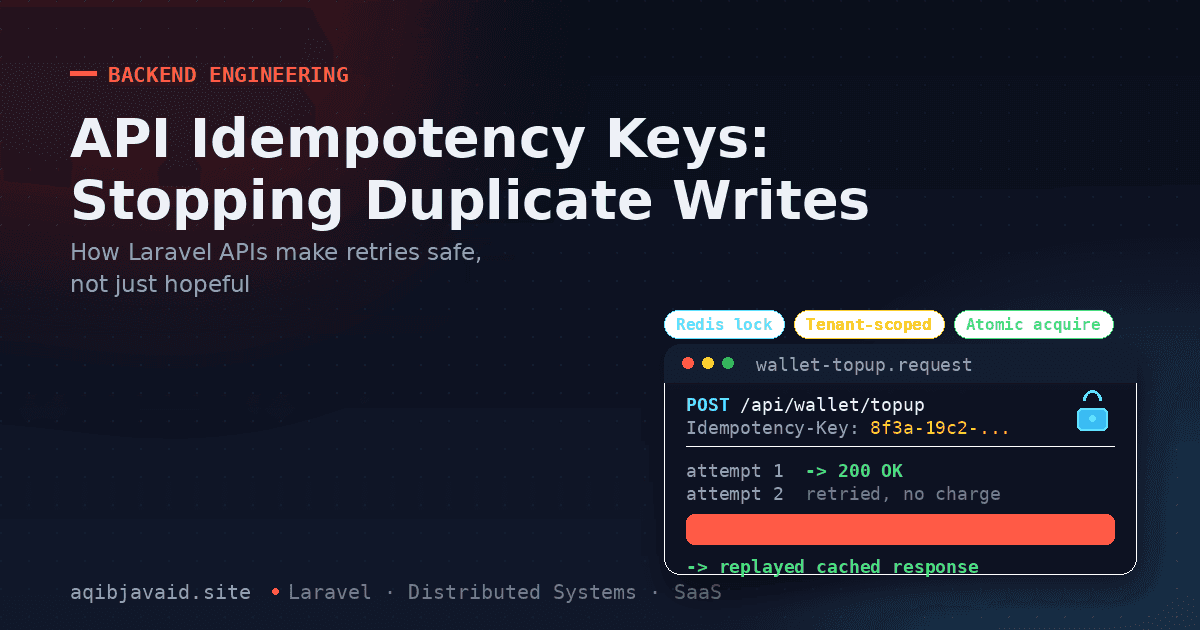
API Idempotency Keys: Stopping Duplicate Writes in Laravel
A retried POST request isn't a safe assumption — it's a duplicate charge waiting to happen. Here's how idempotency keys make retries actually safe.
Designing APIs and integrations that don't fail silently: idempotency, webhooks, rate limiting, retries and data syncs between business systems.
Showing 5 of 5 articles

A retried POST request isn't a safe assumption — it's a duplicate charge waiting to happen. Here's how idempotency keys make retries actually safe.

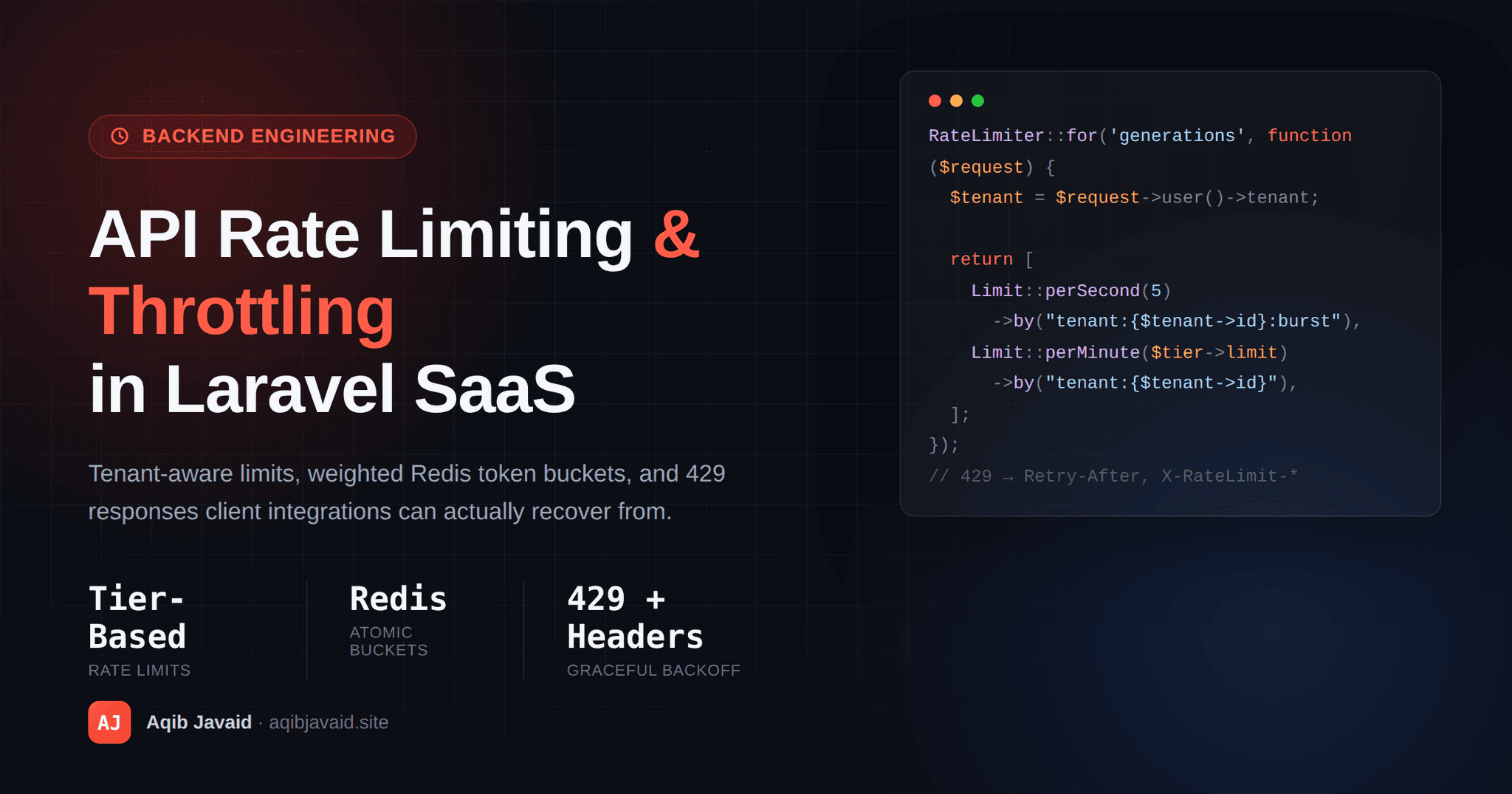
One global throttle:60,1 works until a single client integration hammers your API and takes every other tenant down with it.

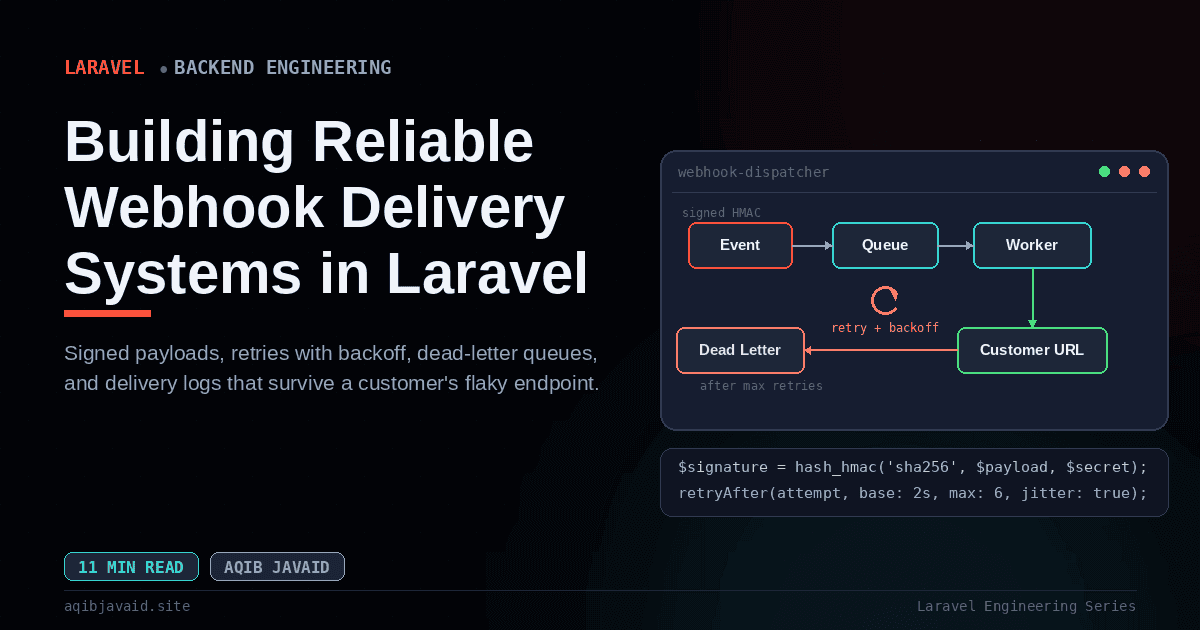
A webhook that fires once and hopes isn't an integration. It's a support ticket waiting to happen the first time a customer's server is down.

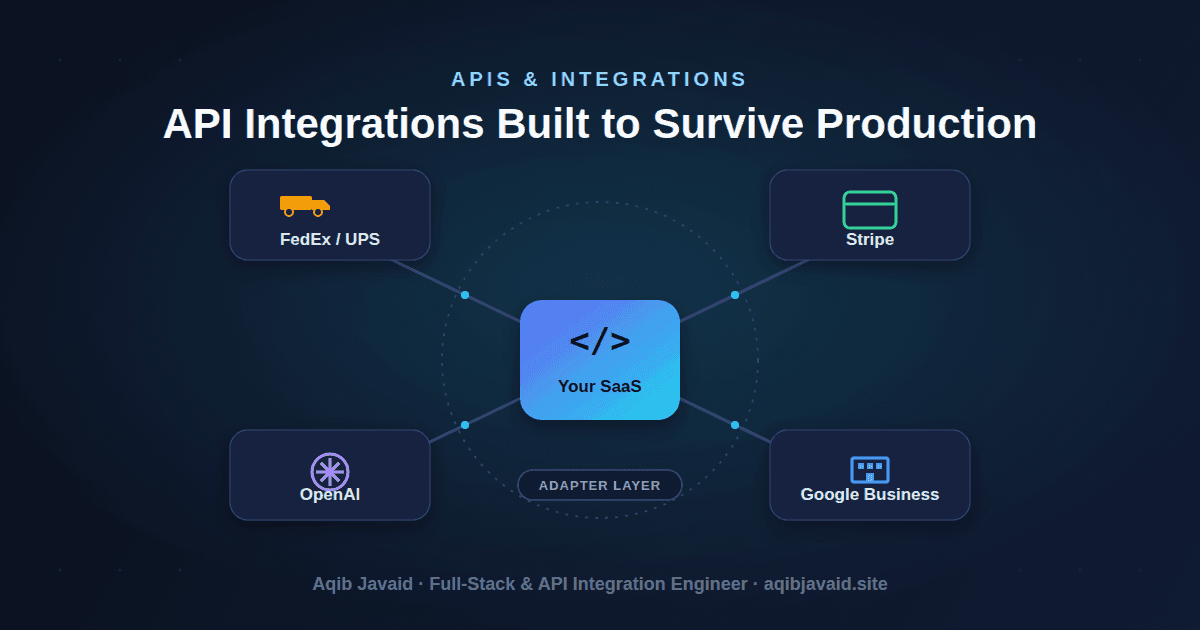
Most API integrations don't fail on day one - they fail at 2am, six months later. Here's how to build ones that don't.

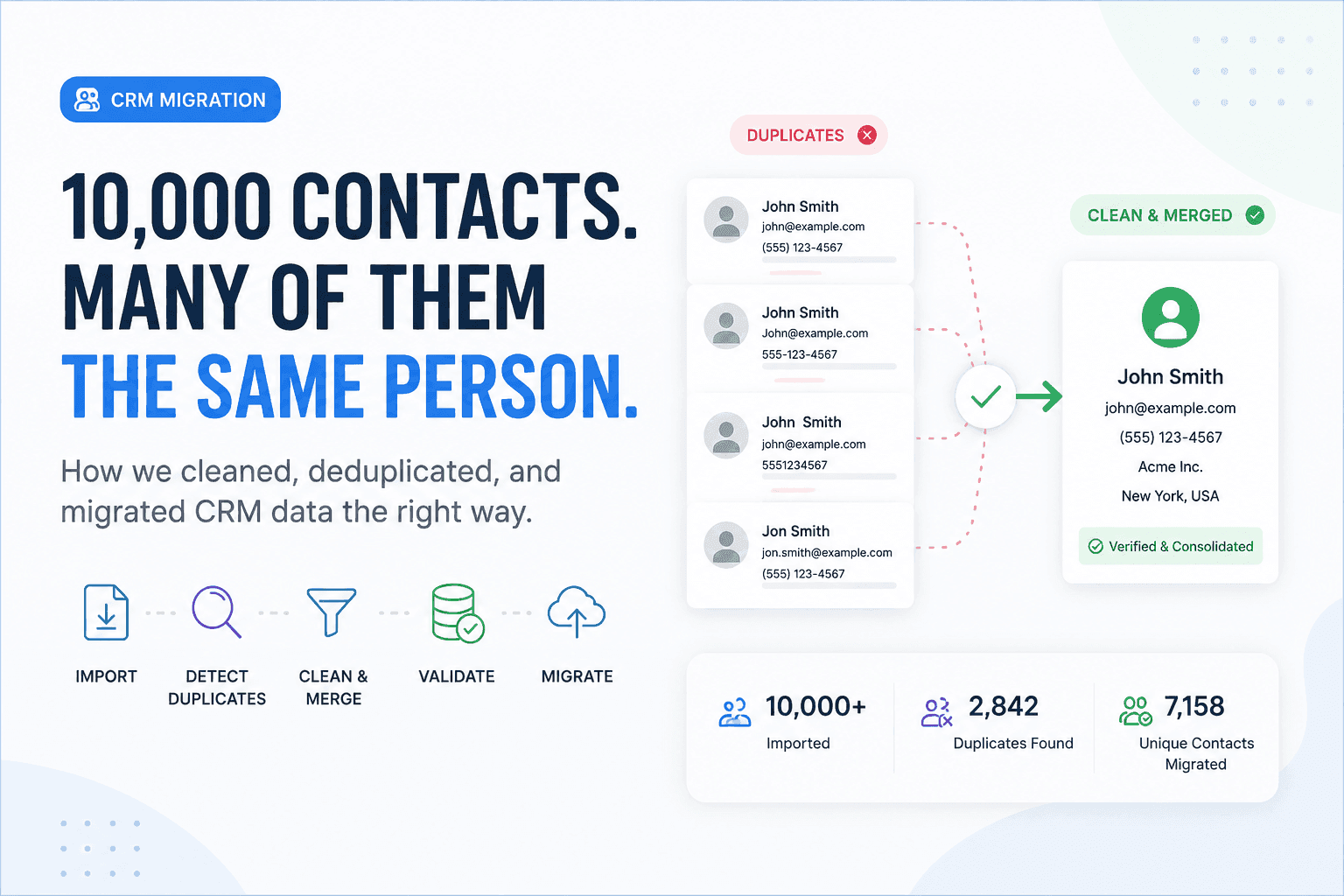
Moving 10,000 contacts was easy. Making sure those records represented real, unique customers was the real engineering challenge.
Most businesses run on several systems that have to agree with each other, and the weak point is almost always the integration: the webhook that fails once and is never retried, the duplicate request that charges twice, the sync nobody is watching.
These guides cover designing APIs and integrations that expect failure: idempotency keys, reliable webhook delivery, rate limiting, retries with backoff, and cleaning up data when two systems have drifted apart.
Need systems connected properly? See my API development & integrations service or book a free call.