Lovable to Production: Migrating an AI-Built Website into a Live React App
A Lovable design ported into a live product with real checkout, forms and speed, matched to within 0.5% of the original.
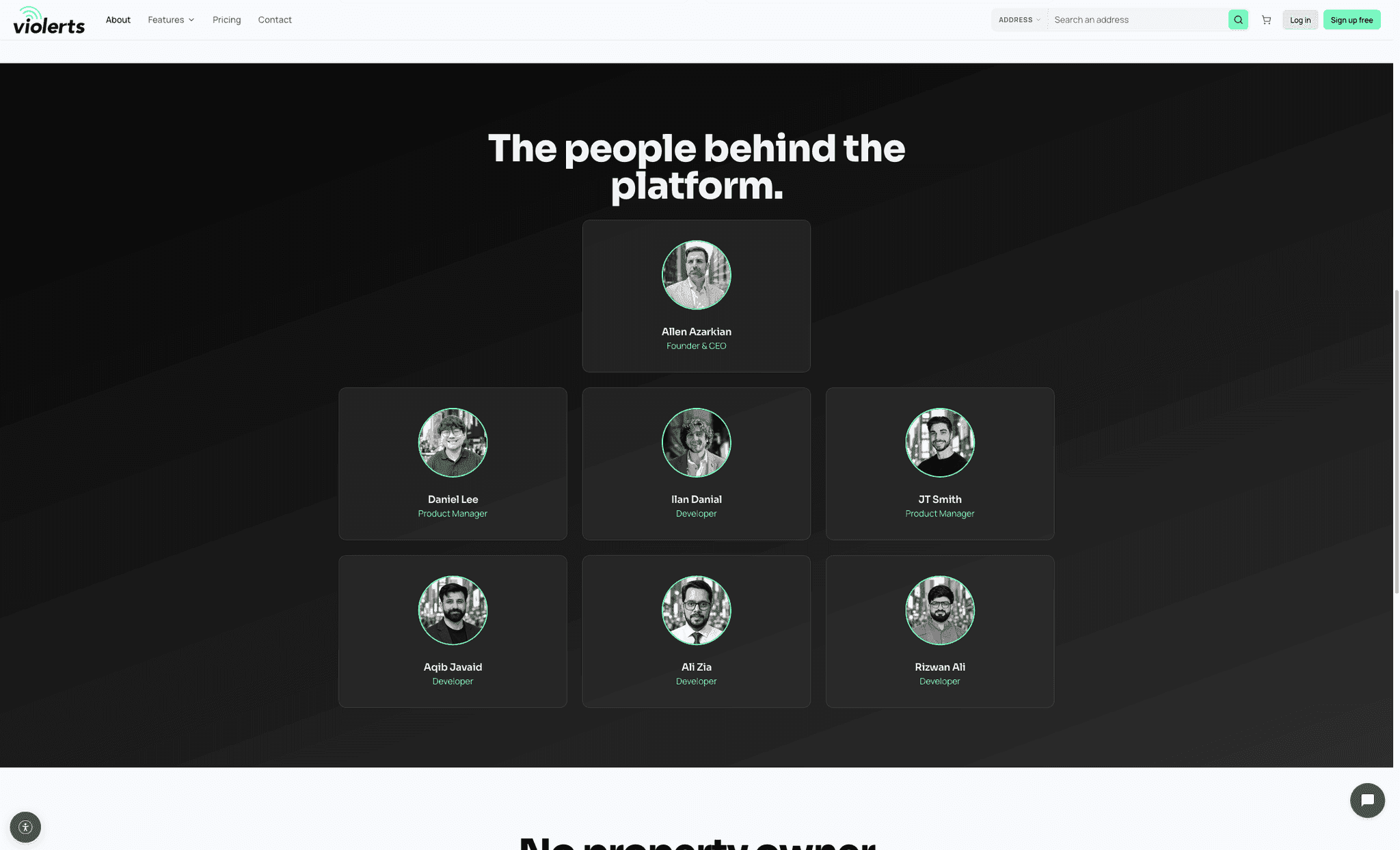
Verified client work: I'm listed as Developer on the Violerts team page. Violerts, a NYC property-compliance platform, designed its site in Lovable but could not ship it as-is. I ported all 15 pages into the live React app with real Stripe checkout, a server-side contact form and automated tests, within 0.5% of the design.
Client
Sep 2025

Daniel Lee
Project Manager, AZARK
Role
Lead Full-Stack Engineer
Year
2026
Category
PropTech · Website Migration

Daniel Lee
Project Manager • AZARK
“Great developer to work with, very knowledgeable”
Verified client work: I'm listed as Developer on the Violerts team page. This is first-hand work for a client I work with directly.
Lovable is excellent at getting a design from idea to screen quickly. The hard part comes next: turning that prototype into a production-ready website that sits inside a live product, takes payments, sends email safely and passes a real build. This is how I handled a Lovable to production migration for Violerts, a New York City property-compliance platform, and what to ask for if you are hiring someone to do the same.
The challenge: a great prototype is not a production site#
The client's new marketing site looked modern and on-brand within days of being designed in Lovable. But it could not simply go live as it was. The company already had a revenue-generating application with logged-in dashboards, real subscriptions and years of existing code (see the Violerts platform case study). The new public site had to live inside it, which meant:
- No collisions with the existing app. The dashboard already used Bootstrap and its own Tailwind setup. A second design system could not override it or be overridden by it.
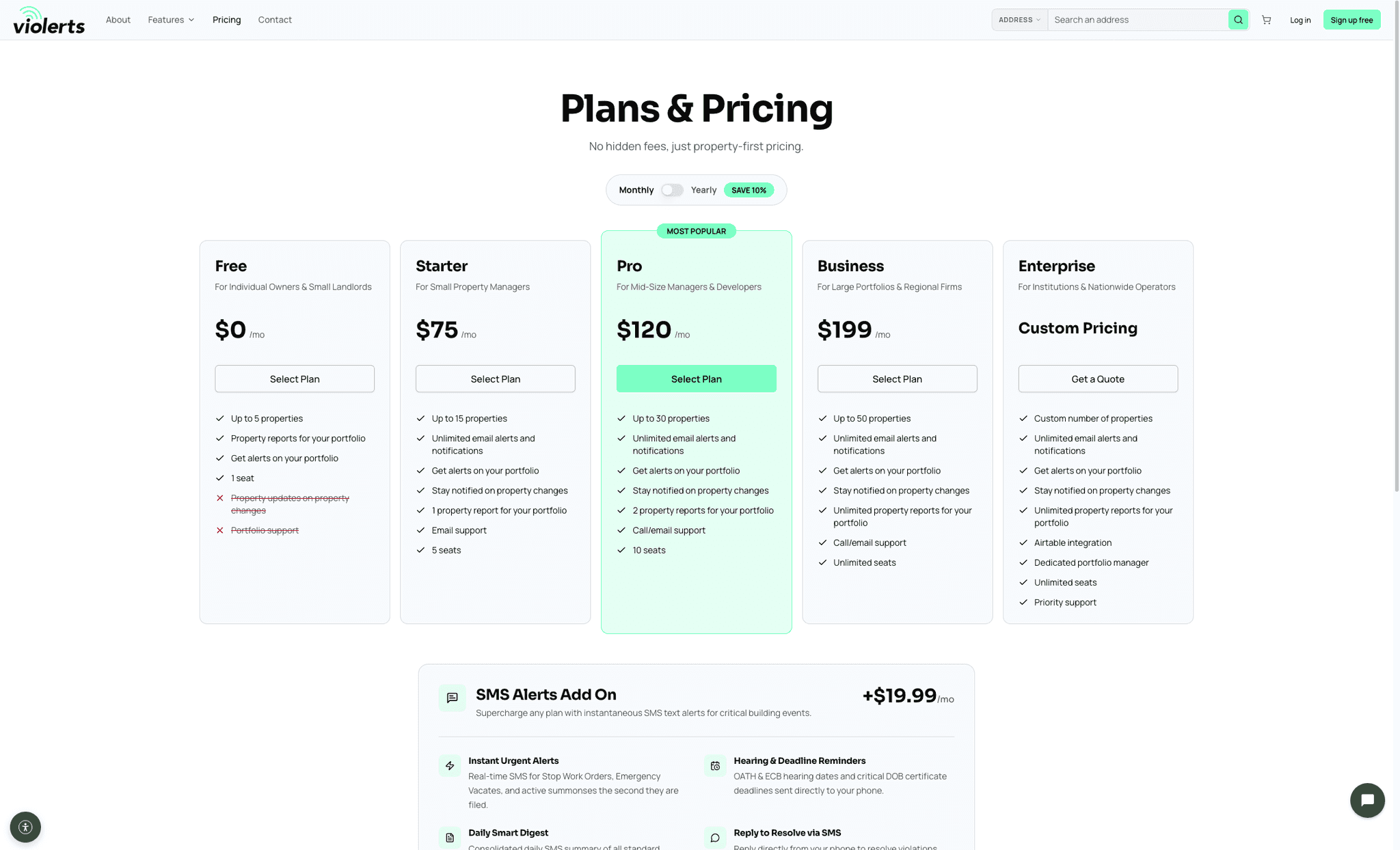
- Real money. The pricing page had to use the live plans and the existing Stripe checkout, not placeholder buttons.
- Real email. The Lovable contact form had no backend. A production form needs server-side delivery, spam protection and error handling.
- Real URLs. Existing tools such as the Backend Search page could not be shadowed by new placeholder routes.
- Real performance. A 2.8 MB hero image is fine in a prototype and costly in production.
- Ongoing design changes. The design team kept iterating in Lovable, so the migration could not be a one-time copy.
The brief boiled down to five things: match the design exactly, break nothing that already works, make it fast, keep it on the client's own hosting and codebase, and keep it easy to update.
The approach: migrate Lovable to React inside the existing app#
I considered rebuilding the pages from scratch and embedding the Lovable output as-is. A rebuild would drift from the approved design, and an embed would fight the existing styles and give no control over checkout, forms or speed. So I chose a repeatable port: bring the Lovable code into the live React application, isolate it, replace every placeholder with a real feature, and verify the result against the original page by page.
1. Audit the export and the host app#
I mapped every Lovable page, component and asset against the existing app: routes, styling system, authentication, checkout flow and build pipeline. That showed where the design could be reused as-is and where it had to be adapted.
2. Isolate the new design from the old app#
Instead of merging two styling systems, the marketing site got its own Tailwind configuration, scoped under a single wrapper class and compiled separately from the dashboard. Marketing utilities are marked so Bootstrap's identically named classes cannot override them. The new site and the old app now live side by side without touching each other.
What I built#
15 pages, not just the home page#
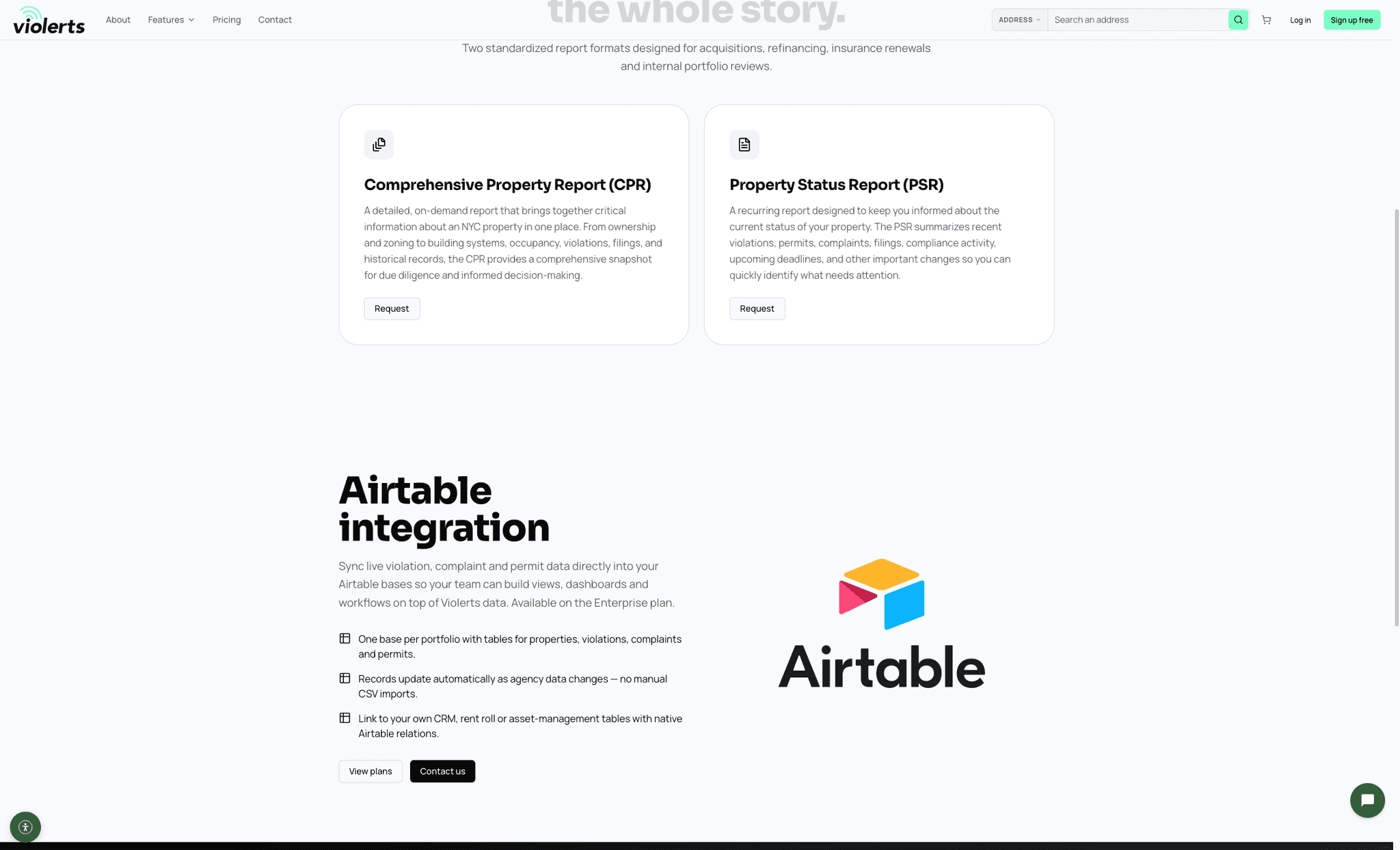
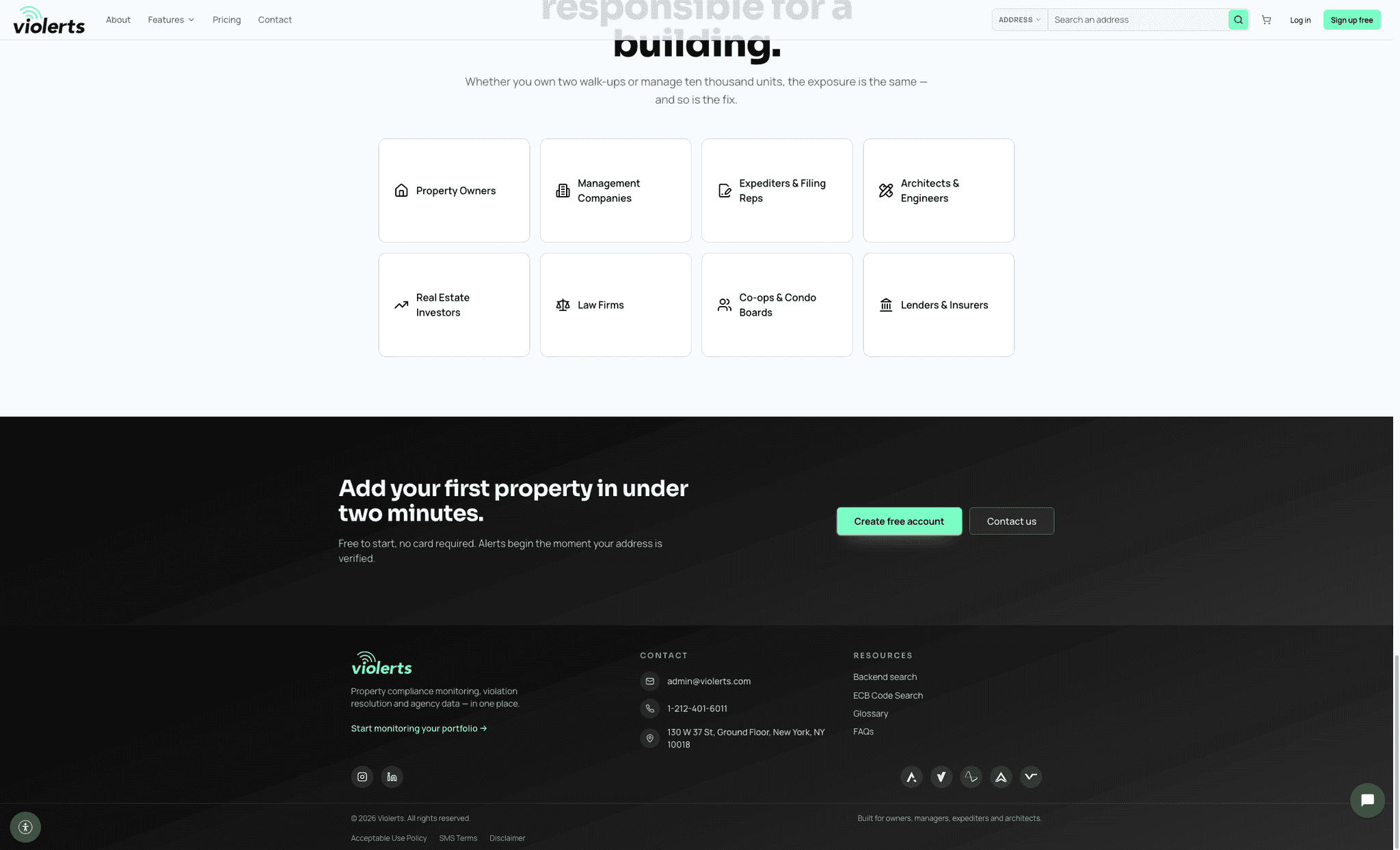
Home, about, features, pricing, contact, FAQs, glossary, alerts, compliance, reports, property data, historical data, violation resolution, ECB code search and infrastructure code lookup. I also rebuilt the shared header and footer, keeping the existing cart link, the real account menu for signed-in users and the legal and partner links the business relies on.
Production features instead of placeholders#
- Pricing and checkout: wired to the live plans and the existing Stripe flow, including the pre-checkout dialog, the monthly-only SMS add-on rule and replay of a pending checkout after sign-up.
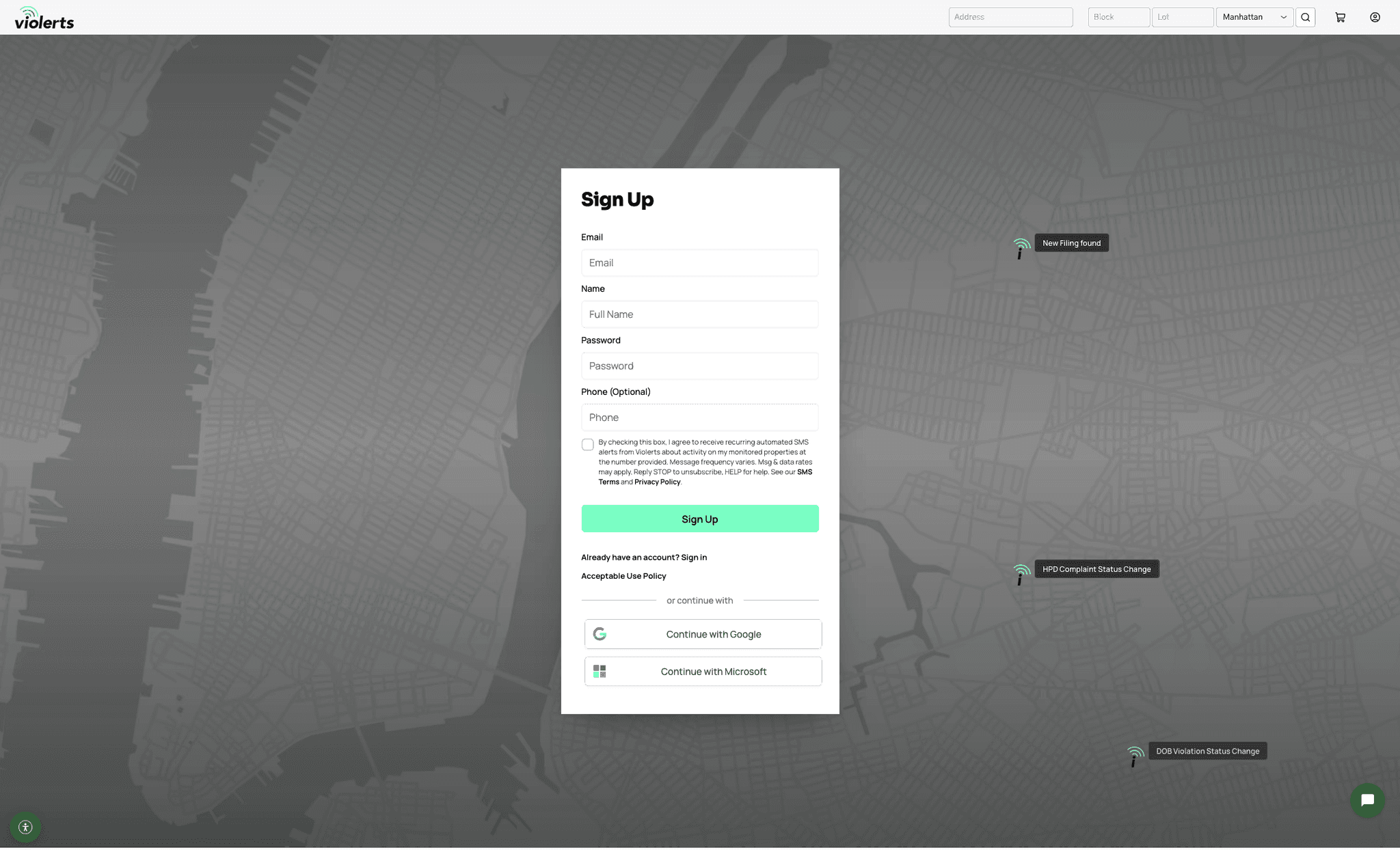
- Search: the header and hero address search reuse the app's existing Google address and block/lot search logic.
- Contact form: replaced a mailto link with a server endpoint that emails the team, sets the visitor as reply-to, shows sending, success and error states, rate-limits requests and includes a honeypot against bots.
- Routing: the real Backend Search tool stays in place, and legacy URLs redirect to their new homes instead of returning errors.
Performance work#
Page speed affects both conversions and search rankings, so I treated it as part of the migration:
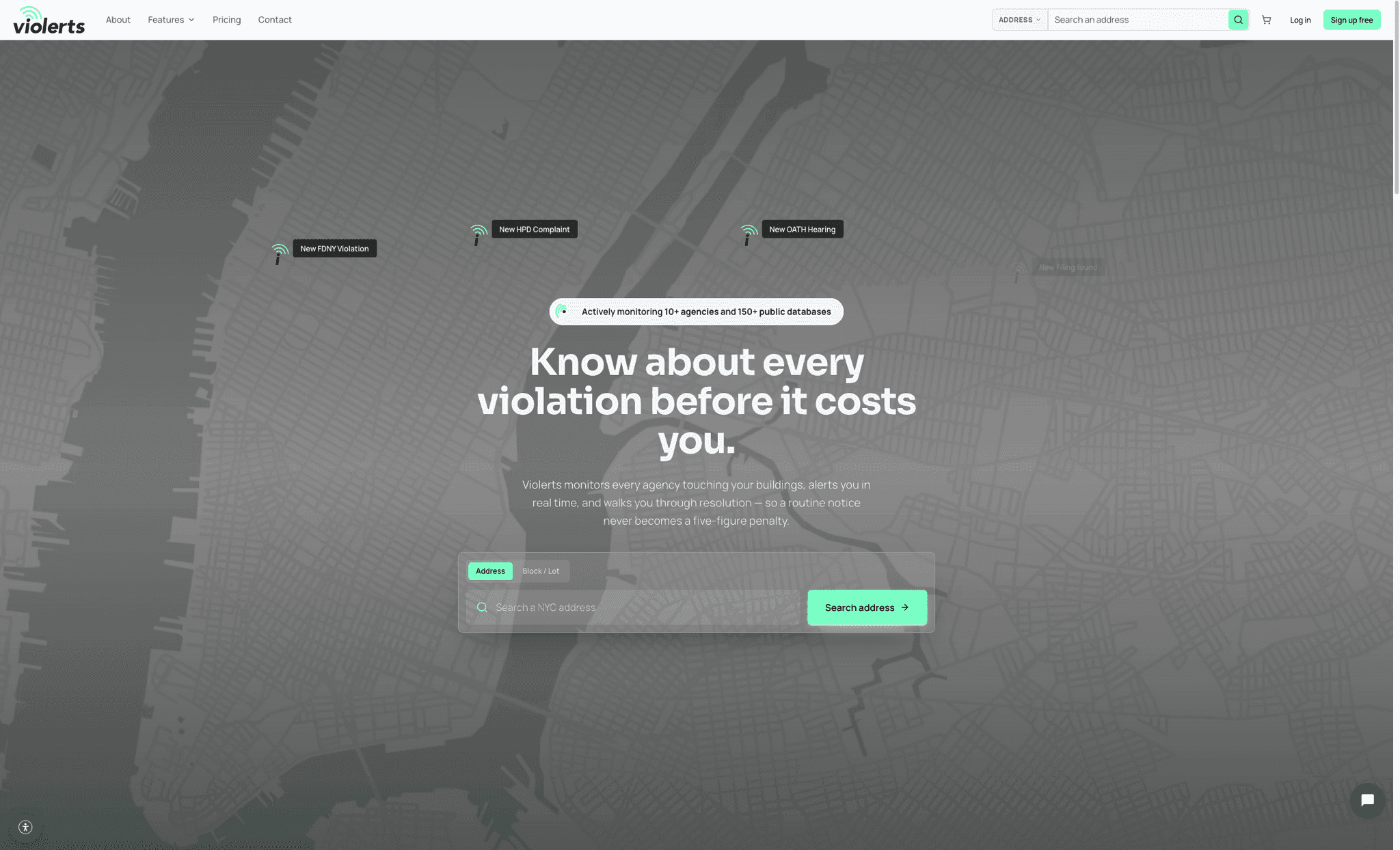
- The hero map image went from 2.8 MB to 281 KB (AVIF with a WebP fallback), visually identical at 38.8 dB PSNR and checked pixel for pixel.
- It is served through a
<picture>element, loaded eagerly with high priority and preloaded on the home page only. - Duplicate PNGs were removed, and the sign-in pages reuse the same optimized files.
- The animated map degrades gracefully: on phones and older browsers it renders as a still image instead of failing.
Verification against the original#
I compared the production build with the live Lovable site across all 15 pages. Every page landed within 0.5% pixel difference (the home page within 1.1% because of its animated map), with identical page heights apart from one legal footer row. This step catches the problems that only appear in production, which most teams underestimate in a Lovable website migration.
Problems that only showed up in production builds#
| Problem | Cause | Fix |
|---|---|---|
| Gradients, blurs and glow effects vanished | The production CSS minifier deleted empty Tailwind variables that development builds leave alone | Emitted them with a value that survives minification |
| Row separators disappeared on glossary and code pages | The minifier rewrote divide-y selectors into invalid CSS | Re-implemented the separators explicitly |
| Cards showed underlines and wrong colors on hover | Old global link styles tied with the new ones | Added a higher-specificity reset |
| Animated background crashed some pages | Missing browser APIs in older browsers and test environments | Feature checks with a static fallback |
None of these show up in a Lovable preview. All of them would have reached customers without a production-grade QA pass.
Staying in sync as the design evolves#
The design team kept improving the Lovable project: a sharper map, new pin labels, new product screenshots, a wider team page. Because the migration is a repeatable port and not a one-off copy, each round of changes was brought across in hours and checked again. Examples include the new hero map and animation timing, real alert types in the animated labels (DOB, ECB, HPD, OATH, FDNY), updated dashboard screenshots, and the animated map extended to the forgot-password and reset-password pages.
Results#
- Design accuracy: all 15 pages within 0.5% pixel difference of the Lovable original.
- Performance: hero image roughly 10x lighter (2.8 MB to 281 KB), served in modern formats.
- Revenue paths intact: live pricing, Stripe checkout and sign-up replay working.
- Lead capture working: the contact form delivers to the team from the server, with spam protection.
- No regressions: automated tests cover the header, footer, routes, pricing checkout and contact form, and the existing URLs and dashboard are untouched.
- Maintainable: a clear process for pulling in future design changes.
Checklist: migrating a Lovable app to production#
Use this when you brief a developer or agency:
- Scoped styling so the new design cannot break existing pages, and vice versa
- Real checkout, forms and authentication, not placeholders
- A production build tested against the original design, not just a dev preview
- Image optimization (AVIF/WebP, correct sizing, preload on the key page)
- Redirects and route protection for existing URLs
- Automated tests for money and lead-capture paths
- Accessibility, titles, meta descriptions and structured data on every page
- A plan for ongoing design changes
Frequently asked questions#
Can I take a Lovable website to production on my own hosting?#
Yes. Lovable projects export to standard React code. The real work is integrating it with your backend, payments, forms and build pipeline, and testing it in a production build.
How long does a Lovable to React migration take?#
It depends on the page count and how much of your existing app the site must connect to. Checkout, forms and QA add more time than the pages themselves. I can give a realistic estimate after a look at your export.
Will my Lovable design look the same after migration?#
It should. I compare the production build against the original page by page and fix anything that drifts. On this project every page was within 0.5% pixel difference.
Can I keep designing in Lovable after the migration?#
Yes. Keep designing in Lovable and bring the changes across through a repeatable process, as happened on this project.
Is a Lovable site good for SEO?#
It can be, but production needs extra care: fast images, correct meta tags, clean URLs, redirects, structured data and good Core Web Vitals. These are the things I add during migration.
What is the difference between a Lovable prototype and a production-ready website?#
A prototype proves the design. A production site adds security, real integrations, performance tuning, automated tests, monitoring and a deployment process.
Have a Lovable or AI-built site that needs to go live?#
I take designs from AI builders like Lovable and turn them into fast, secure, search-ready production sites and web apps, handling the integrations, payments, email, performance and QA a prototype tool cannot. See my React and Next.js development services and full-stack web development, then get in touch or book a call and I will tell you what your migration involves.
Gallery
Tech stack
Timeline & Milestones
Audit
Mapped every Lovable page, component and asset against the live app's routes, styling, auth, checkout and build pipeline.
Isolation
Gave the marketing site its own scoped Tailwind configuration so it and the existing dashboard cannot affect each other.
Port and integrate
Ported all 15 pages and replaced placeholders with live Stripe checkout, shared address search, a server-side contact form and redirects.
Optimize and verify
Compressed images, then compared the production build with the Lovable original page by page and fixed production-only CSS issues.
Ongoing sync
Brought each new round of Lovable design changes across and re-checked it.
Outcomes & Impact
- 15
15
Pages ported to production
- < 0.5%
< 0.5%
Max pixel difference vs design
- 2.8 MB → 281 KB
2.8 MB → 281 KB
Hero image weight
- ~90%
~90%
Reduction in hero image size